


Garden paths serve as the arteries of outdoor spaces, guiding visitors through carefully curated landscapes whilst establishing the visual tone of an entire property. Yet many homeowners unknowingly cling to pathway designs that betray their age, undermining the contemporary appeal of otherwise well-maintained gardens. From jarring colour choices to impractical materials, these dated decisions can instantly diminish kerb appeal and property value. Recognising which pathway styles have fallen from favour and understanding the principles behind modern alternatives enables homeowners to transform their outdoor spaces into cohesive, timeless environments that reflect current design sensibilities.
Garden Path Ideas to Avoid
White Gravel: The Harsh Contrast Problem
White gravel paths, once considered a budget-friendly solution for garden walkways, now present several aesthetic challenges that landscape professionals advise against. The stark contrast created by brilliant white stones against natural greenery produces a visually jarring effect that disrupts the organic flow of garden spaces. Beyond the aesthetic concerns, white gravel carries practical drawbacks that compound its outdated appearance:
- Stones migrate into lawn areas, creating maintenance headaches
- Dirt and organic debris show prominently against the light surface
- The brightness can create uncomfortable glare in sunny conditions
- The material often appears cheap despite initial investment
Small Slabs and Inappropriate Scale
Pathways constructed from undersized paving elements create a fragmented, busy appearance that diminishes the perceived quality of outdoor spaces. Very small stones or tiles force the eye to focus on individual components rather than appreciating the pathway as a unified design element. This approach results in a cluttered visual effect that makes gardens appear smaller and less sophisticated than they actually are.
Zigzag Paving Patterns
Geometric patterns featuring sharp angles and zigzag configurations represent another dated approach to pathway design. These disorienting layouts create visual confusion rather than guiding movement naturally through garden spaces. The fussy appearance of such patterns draws attention to the path itself rather than allowing it to function as a subtle connector between garden features.
Cluttered and Overgrown Edges
Pathways with poorly maintained borders where plants encroach chaotically onto walking surfaces convey an impression of neglect rather than natural charm. Whilst softening hard edges with vegetation remains desirable, the distinction between intentional design and simple oversight becomes crucial. Overgrown edges reduce functional width, create trip hazards, and suggest a lack of attention to garden maintenance.
Black Wooden Decking
Dark-stained timber decking as pathway material presents both practical and aesthetic limitations that have led designers to recommend alternatives. Black decking absorbs heat, becomes slippery when wet, and creates a visually heavy presence that can make gardens feel enclosed and unwelcoming. The material also shows dust and pollen conspicuously, requiring frequent cleaning to maintain appearance.
Shallow and Uneven Tracks
Pathways with insufficient depth or irregular surfaces combine poor functionality with unappealing aesthetics. Shallow installations allow edges to lift, create puddles, and develop uneven sections that present safety hazards. These practical failures inevitably lead to a neglected appearance that undermines the entire garden design.
Over-Trimmed Hedging
Whilst not pathways themselves, excessively manicured hedges lining garden walks create a rigid, high-maintenance aesthetic that feels dated in contemporary landscape design. The formal, geometric precision of over-clipped borders suggests a style more suited to institutional settings than residential gardens seeking relaxed, natural appeal.
Understanding these problematic approaches provides the foundation for exploring materials and designs that align with current landscape architecture principles.
Contemporary Alternatives for a Modern Garden Design
Shell Paths: Natural Material Integration
Crushed shell pathways offer an environmentally conscious alternative that introduces texture and subtle colour variation into garden designs. These paths provide excellent drainage, create a pleasant sound underfoot, and develop a naturally compacted surface over time. The organic appearance of shell materials harmonises beautifully with coastal and cottage garden styles whilst maintaining sufficient formality for structured landscapes.
Natural Stone Paving
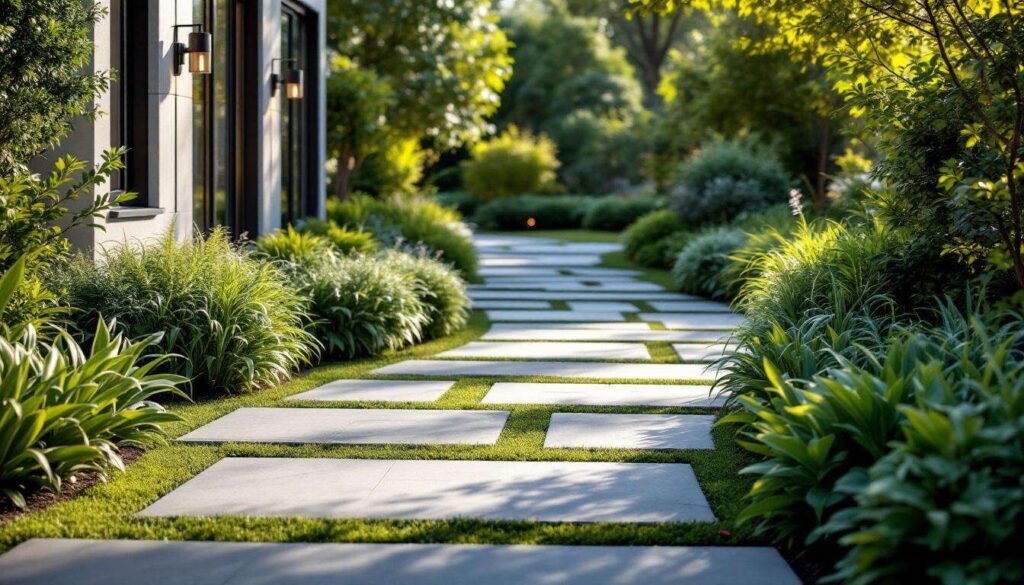
Natural stone slabs in generous proportions represent the gold standard for contemporary pathway design. Materials such as sandstone, limestone, and slate offer:
- Timeless appeal that transcends design trends
- Durability that improves with age
- Natural colour variations that complement plantings
- Substantial visual weight that anchors garden compositions
The investment in quality stone pays dividends through longevity and the sophisticated aesthetic that elevates entire outdoor spaces.
Themed Path Coordination
Modern landscape design emphasises cohesive relationships between pathways and surrounding garden styles. A wild, naturalistic garden benefits from informal stepping stones set within ground cover plants, whilst contemporary spaces demand clean-lined concrete or porcelain pavers. Formal gardens accommodate traditional materials like brick or granite setts arranged in classic patterns. This approach ensures pathways enhance rather than conflict with the intended garden character.
Sustainable and Recycled Materials
Environmental consciousness increasingly influences material selection, with recycled and sustainable options gaining prominence in pathway construction. Reclaimed brick, recycled concrete pavers, and permeable materials that support drainage all align with contemporary values whilst offering distinctive aesthetic qualities. These choices demonstrate thoughtful design that extends beyond superficial appearance to embrace responsible stewardship.
Soft Curves and Organic Shapes
Contemporary pathway design favours gentle curves over rigid straight lines and harsh angles. Flowing paths that meander naturally through garden spaces create a sense of discovery and relaxation, encouraging slower movement and greater engagement with plantings. This approach reflects current understanding of how people experience outdoor spaces, prioritising psychological comfort alongside practical function.
Selecting appropriate materials represents only one aspect of successful pathway design, with durability considerations playing an equally critical role.
Designers’ Tips for Durable Pathway Materials
Material Longevity Considerations
Professional landscape architects emphasise selecting materials based on long-term performance rather than initial cost or immediate visual appeal. Durable materials withstand freeze-thaw cycles, resist staining, and maintain structural integrity under regular foot traffic. The following table compares common pathway materials:
| Material | Expected Lifespan | Maintenance Level | Weather Resistance |
|---|---|---|---|
| Natural Stone | 50+ years | Low | Excellent |
| Concrete Pavers | 25-30 years | Low | Very Good |
| Brick | 25-50 years | Medium | Good |
| Gravel | 10-15 years | High | Fair |
| Timber Decking | 10-20 years | High | Poor to Fair |
Climate-Appropriate Selection
Material performance varies significantly based on regional climate conditions. Areas experiencing harsh winters require frost-resistant materials, whilst regions with high rainfall benefit from excellent drainage properties. Coastal locations demand materials that withstand salt exposure, and hot climates necessitate surfaces that remain comfortable underfoot despite sun exposure.
Installation Quality
Even superior materials fail prematurely without proper installation techniques. Adequate base preparation, appropriate edging restraints, and correct joint spacing all contribute to pathway longevity. Professional installation typically proves more economical over time than amateur attempts requiring eventual replacement.
Beyond material selection and installation, the physical dimensions and spatial relationships of pathways profoundly influence both function and aesthetics.
The Importance of Proportions and Space in Your Pathways
Width Considerations
Pathway width dramatically affects both practical usability and visual impact. Primary paths connecting frequently used areas require sufficient width for comfortable passage, typically a minimum of 1.2 metres to allow two people to walk side by side. Secondary paths may narrow to 60-90 centimetres, whilst stepping stone paths through planted areas can reduce further whilst maintaining functionality.
Scale Relationships
Pathway proportions must relate harmoniously to surrounding garden elements. Large gardens accommodate wider, more substantial paths without overwhelming the space, whilst compact gardens require careful scaling to prevent paths from dominating limited square metreage. The size of paving elements should similarly reflect overall garden scale, with larger spaces benefiting from generous slabs and smaller gardens requiring more modest dimensions.
Journey and Destination Balance
Effective pathway design creates appropriate relationships between movement corridors and destination spaces. Paths should narrow and widen strategically, contracting through transitional areas and expanding at focal points or seating areas. This variation creates rhythm and visual interest whilst reinforcing the functional hierarchy of outdoor spaces.
Properly proportioned pathways require thoughtful illumination to maximise safety and extend usability into evening hours.
Optimising Lighting for Safe and Welcoming Garden Paths
Safety Through Strategic Illumination
Pathway lighting serves the essential function of preventing accidents whilst simultaneously enhancing garden ambience. Effective schemes illuminate changes in level, path edges, and potential obstacles without creating glare or harsh shadows. Low-level fixtures positioned along path edges provide adequate visibility whilst maintaining a subtle, unobtrusive presence during daylight hours.
Layered Lighting Approaches
Contemporary outdoor lighting design employs multiple fixture types to create dimensional illumination:
- Path lights at regular intervals for consistent visibility
- Uplighting on adjacent trees or architectural features for ambient glow
- Step lights integrated into level changes
- Accent lighting highlighting focal points visible from pathways
This layered approach creates visual depth whilst ensuring adequate illumination for safe navigation.
Energy Efficiency and Control
Modern pathway lighting embraces energy-efficient LED technology combined with intelligent control systems. Motion sensors activate lights only when needed, whilst timers and smart controls allow customised operation schedules. Solar-powered fixtures offer installation simplicity for locations where electrical infrastructure proves challenging, though mains-powered systems typically provide superior reliability and light output.
Lighting represents one element in the broader integration of pathways within living garden ecosystems.
Integrating Vegetation for Harmonious Garden Paths
Softening Hard Edges
Strategic planting along pathway margins creates visual transitions between hard surfaces and surrounding garden beds. Low-growing perennials that spill gently onto paving edges soften the stark boundary without obstructing passage. Plants such as lady’s mantle, hardy geraniums, and creeping thyme provide this softening effect whilst tolerating occasional foot traffic on overhanging foliage.
Sensory Enhancement
Pathways offer opportunities to engage multiple senses through thoughtful plant selection. Fragrant species positioned along walkways release scent when brushed against, whilst plants with interesting textures invite tactile interaction. The sound of ornamental grasses rustling in breezes adds auditory interest to the pathway experience.
Seasonal Interest
Year-round appeal requires selecting plants that provide varied seasonal contributions along pathways. Spring bulbs, summer perennials, autumn foliage colour, and winter structure from evergreens or ornamental stems ensure pathways remain visually engaging throughout the year rather than appearing barren during dormant seasons.
Garden paths that successfully balance aesthetic appeal with practical function, incorporate durable materials suited to local conditions, maintain appropriate proportions, feature thoughtful illumination, and integrate harmoniously with surrounding vegetation transform outdoor spaces into cohesive, welcoming environments. Moving beyond dated approaches towards contemporary design principles elevates not only the immediate visual impact but also the long-term value and enjoyment derived from residential landscapes. Thoughtful pathway design represents an investment in daily quality of life and property enhancement that rewards homeowners for years to come.