



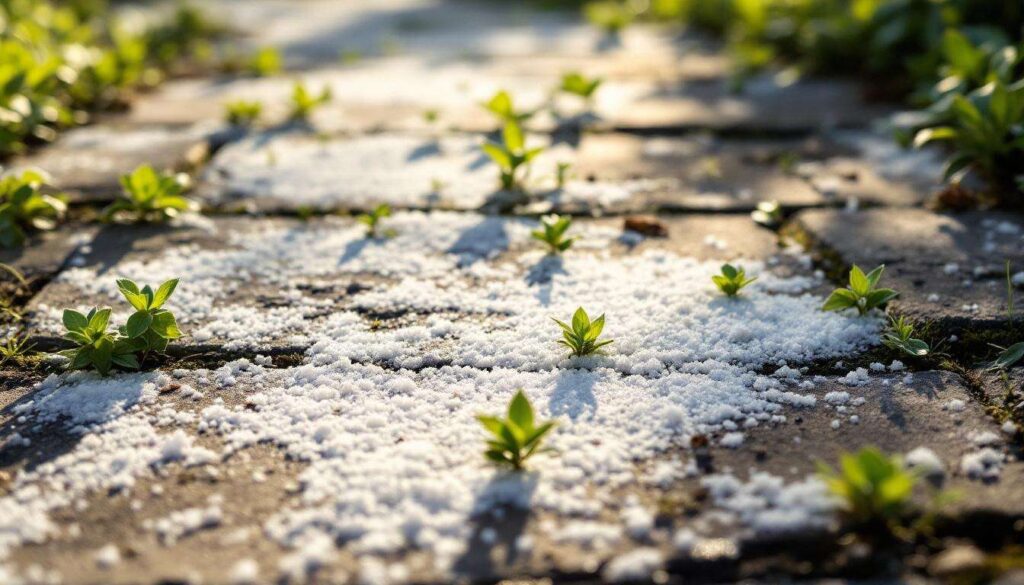
Weeds remain one of the most persistent challenges for gardeners and homeowners seeking to maintain pristine outdoor spaces. Whilst chemical herbicides dominate the market, many are turning towards household substances to tackle unwanted vegetation. Salt, a mineral found in virtually every kitchen, has emerged as a surprisingly potent weapon in the battle against invasive plants. Understanding how this common compound disrupts plant life and learning to apply it correctly can transform your approach to garden maintenance whilst minimising reliance on synthetic chemicals.
Why is salt effective against weeds ?
Salt functions as a natural desiccant that fundamentally disrupts the biological processes essential for plant survival. The science behind its effectiveness lies in basic chemistry and plant physiology.
The osmotic process explained
When salt dissolves in soil moisture, it creates a hypertonic environment around plant roots. This high concentration of sodium chloride triggers osmosis, whereby water molecules move from areas of lower salt concentration (inside plant cells) to areas of higher concentration (the surrounding soil). As water is drawn out of the plant’s cellular structure, the organism experiences severe dehydration. Cells collapse, leaves wilt, and the plant’s ability to photosynthesise ceases entirely. Within days, most weeds subjected to adequate salt exposure will die completely.
Disruption of nutrient absorption
Beyond dehydration, salt interferes with a plant’s capacity to absorb essential nutrients. Sodium ions compete with vital minerals such as potassium, calcium, and magnesium for uptake through root systems. This nutrient blockage compounds the stress already caused by water loss, accelerating plant decline. Even hardy species struggle to maintain metabolic functions when their nutrient pathways are compromised by excessive sodium presence.
Understanding these mechanisms reveals why salt proves so devastating to plant life, setting the stage for examining its broader effects on unwanted vegetation.
How salt affects unwanted plants
The impact of salt extends beyond immediate wilting, creating conditions that prevent regrowth and affect different plant species variably.
Speed and visibility of results
Most gardeners observe visible effects within 24 to 48 hours of application. Annual weeds with shallow root systems succumb fastest, displaying browning leaves and collapsed stems. Perennial weeds with deeper root structures may require repeated applications, though their above-ground portions typically show distress within the same timeframe.
| Weed Type | Time to Visible Effect | Applications Needed |
|---|---|---|
| Annual weeds | 24-48 hours | 1-2 |
| Perennial weeds | 48-72 hours | 2-4 |
| Woody plants | 3-7 days | 3-5 |
Long-term soil impact
Salt’s persistence in soil represents both an advantage and a significant drawback. Whilst it prevents immediate regrowth in treated areas, excessive accumulation creates barren zones where nothing will grow for extended periods. Rainfall and irrigation gradually leach salt from soil, but this process can take months or even years depending on application rates and environmental conditions.
These lasting effects necessitate careful consideration of application methods to maximise benefits whilst minimising unintended consequences.
Safe methods to use salt as a weed killer
Proper application techniques ensure effectiveness whilst protecting desirable plants and limiting environmental damage.
Preparing effective salt solutions
The most commonly recommended mixture combines one part salt to three parts water. For stubborn weeds, some gardeners increase concentration to a 1:2 ratio. Dissolve the salt completely in warm water before transferring to a spray bottle or watering can for precise application.
Strategic application zones
Salt works best in areas where you have no intention of growing plants:
- Cracks in paving stones and driveways
- Gravel paths and walkways
- Borders between lawn and hardscaping
- Areas beneath fencing
- Spaces around permanent structures
Application timing and technique
Apply salt solutions during dry, calm weather when no rain is forecast for at least 48 hours. Direct the spray or pour exclusively onto weed foliage and stems, avoiding contact with soil near desired plants. Early morning application allows maximum absorption before evening dew dilutes the solution. For persistent weeds, repeat applications weekly until complete eradication occurs.
Whilst these methods prove effective, comparing salt to alternative approaches provides valuable perspective on its role in weed management.
Advantages and disadvantages of salt compared to other methods
Every weed control method presents distinct benefits and limitations that influence suitability for specific situations.
Benefits of using salt
- Cost-effectiveness: salt costs significantly less than commercial herbicides
- Immediate availability: no special trips to garden centres required
- Non-toxic to humans and pets: safer handling compared to synthetic chemicals
- Rapid visible results: effects appear within days
- Simple application: requires no specialised equipment
Drawbacks and limitations
Despite its advantages, salt presents several significant concerns:
- Non-selective action: damages all plants indiscriminately
- Soil degradation: accumulation harms soil structure and fertility
- Environmental persistence: leaches into groundwater and affects broader ecosystems
- Limited precision: difficult to contain to target areas
- Potential legal restrictions: some jurisdictions prohibit salt use for weed control
| Method | Cost | Environmental Impact | Selectivity |
|---|---|---|---|
| Salt | Very low | Moderate to high | Non-selective |
| Manual weeding | Low (time investment) | None | Highly selective |
| Vinegar | Low | Low | Non-selective |
| Chemical herbicides | Moderate to high | Moderate to high | Varies by product |
These comparisons underscore the importance of implementing protective measures when choosing to use salt for weed control.
Usage precautions: protect your garden and environment
Responsible salt application requires awareness of potential hazards and implementation of protective strategies.
Protecting desirable plants
Maintain a buffer zone of at least 30 centimetres between salt application areas and valued plants. Root systems extend far beyond visible foliage, making proximity a critical consideration. Consider installing physical barriers such as plastic sheeting or metal edging to prevent lateral salt migration through soil.
Soil health considerations
Excessive salt fundamentally alters soil chemistry and microbial communities. Beneficial organisms that decompose organic matter and fix nitrogen suffer population crashes in saline conditions. Before applying salt, test soil in surrounding areas to establish baseline salinity levels. Avoid repeated applications in the same location, which accelerate accumulation beyond recovery thresholds.
Water source protection
Salt readily dissolves and travels with water movement. Applications near storm drains, streams, ponds, or wells risk contaminating water supplies. Runoff from treated areas can damage aquatic ecosystems and render water unsuitable for irrigation or consumption. Always apply salt at least five metres from any water feature or drainage system.
Legal and regulatory awareness
Some local authorities prohibit or restrict salt use for vegetation control due to environmental concerns. Check with your council or environmental agency before proceeding with salt applications, particularly in ecologically sensitive areas or protected zones.
For those seeking effective weed control without salt’s drawbacks, numerous alternative approaches merit consideration.
Natural alternatives to salt for effective weeding
Several methods offer comparable effectiveness whilst posing fewer long-term risks to soil and surrounding plants.
Vinegar-based solutions
Horticultural vinegar containing 20% acetic acid burns weed foliage on contact. Unlike salt, vinegar breaks down rapidly in soil without accumulating. Apply directly to leaves during sunny weather for maximum effect. Multiple applications may be necessary for perennial species.
Boiling water treatment
Pouring boiling water directly onto weeds provides an immediate, chemical-free solution. The extreme heat destroys cell structures instantly, causing rapid death. This method works exceptionally well for weeds in paving cracks and gravel areas. Exercise caution to avoid burns and protect nearby plants from splashing.
Mulching and ground covers
Organic mulches suppress weed germination by blocking light whilst improving soil quality as they decompose:
- Wood chips (5-10 centimetre depth)
- Shredded bark
- Straw or hay
- Newspaper or cardboard layers
- Living ground covers such as clover
Flame weeding
Propane-powered flame weeders apply concentrated heat to rupture plant cells without igniting vegetation. This technique proves particularly effective for large areas and requires no chemicals whatsoever. Always observe fire safety protocols and check local regulations before use.
Salt undeniably offers a readily available, cost-effective solution for controlling weeds in specific situations. Its mechanism of action through osmotic dehydration and nutrient disruption proves devastatingly effective against most plant species. However, the non-selective nature of salt and its potential for long-term soil damage demand careful, strategic application limited to areas where future plant growth is unwelcome. Gardeners must weigh salt’s immediate benefits against environmental persistence, considering alternatives such as vinegar, boiling water, or mulching for areas requiring more sustainable approaches. When used judiciously in appropriate locations with proper precautions, salt can serve as one tool amongst many in an integrated weed management strategy that balances effectiveness with environmental responsibility.