



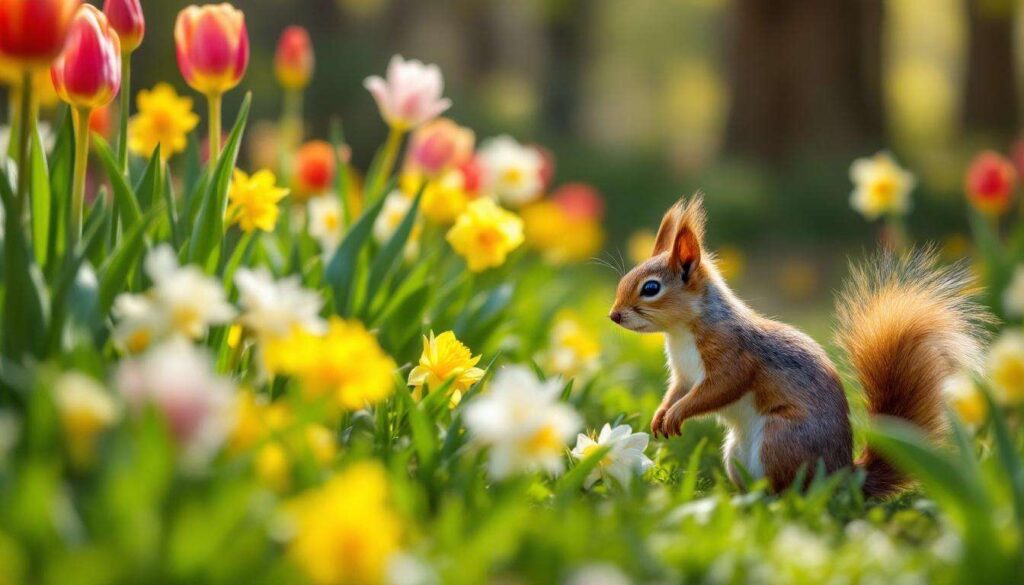
Spring bulbs represent one of the most rewarding investments for any gardener, promising vibrant displays of colour after months of winter dormancy. Yet these underground treasures face a persistent threat from an unlikely adversary: the seemingly innocent squirrel. Many gardeners have experienced the frustration of discovering their carefully planted tulips, crocuses, and other bulbs unearthed and devoured before they ever have a chance to bloom. The battle between gardener and squirrel has raged for generations, with varying degrees of success on both sides. However, sometimes the most effective solutions come not from modern innovations but from the wisdom passed down through families.
Problem with squirrels in the garden
The extent of bulb damage
Grey squirrels have established themselves as formidable garden pests throughout the UK, particularly when it comes to spring bulbs. These agile rodents possess an uncanny ability to locate freshly planted bulbs, often within hours of planting. The damage they inflict goes beyond simple nibbling; squirrels frequently excavate entire planting areas, leaving behind scattered soil, exposed bulbs, and destroyed garden beds. Tulip bulbs appear particularly vulnerable, though crocuses, hyacinths, and other spring varieties also fall victim to their appetites.
Timing and vulnerability
The problem intensifies during specific periods throughout the gardening calendar:
- Immediately after autumn planting when soil disturbance signals fresh food sources
- During winter months when natural food supplies diminish
- Early spring as squirrels prepare for breeding season and require additional nutrition
- Following heavy rainfall when softened earth facilitates easier digging
The frustration compounds when gardeners discover damage to bulbs planted months earlier, representing not only financial loss but also the disappointment of anticipated spring displays that will never materialise. Understanding why these creatures target bulbs becomes essential in developing effective protection strategies.
Why squirrels eat bulbs
Nutritional value and survival instincts
Squirrels don’t consume spring bulbs out of malice but rather biological necessity. These underground structures contain concentrated nutrients, including starches, proteins, and moisture, making them valuable food sources during lean periods. For squirrels, bulbs represent convenient, energy-dense meals that require relatively little effort to obtain compared to foraging for nuts or seeds in winter.
Behavioural patterns
Several factors drive squirrel behaviour towards bulb consumption:
| Factor | Impact on bulb predation |
|---|---|
| Food scarcity | Increases bulb targeting by 60-70% |
| Population density | Higher squirrel numbers intensify competition |
| Memory capability | Squirrels remember productive digging locations |
| Seasonal breeding | Spring breeding demands extra nutrition |
Grey squirrels possess exceptional spatial memory, allowing them to recall garden areas where they’ve previously found food. This means once they’ve successfully raided a bulb planting, they’re likely to return repeatedly. Their persistent nature and adaptability make them particularly challenging adversaries for gardeners attempting to protect their spring displays. These insights into squirrel behaviour inform the various protection methods gardeners have developed over time.
Traditional protection strategies
Physical barriers and deterrents
Gardeners have employed numerous conventional methods to safeguard their bulbs with varying degrees of success. Wire mesh cages placed over planting areas provide physical protection, though they require careful installation and removal before shoots emerge. Chicken wire laid flat across beds prevents digging but can interfere with plant growth if not properly managed.
Chemical and sensory repellents
Commercial repellents offer another approach, though their effectiveness often proves temporary:
- Capsaicin-based sprays that irritate squirrel noses and mouths
- Predator urine products designed to trigger fear responses
- Blood meal or bone meal mixed into soil as deterrents
- Mothballs or similar strong-smelling substances
These solutions typically require frequent reapplication, particularly after rainfall, making them labour-intensive and costly. Additionally, some chemical deterrents may affect soil chemistry or prove harmful to other wildlife, raising environmental concerns for conscientious gardeners.
Alternative planting techniques
Some gardeners advocate planting bulbs that squirrels naturally avoid, such as daffodils, alliums, and fritillaries, which contain compounds toxic or unpalatable to rodents. Others suggest planting bulbs deeper than standard recommendations or surrounding preferred bulbs with these naturally resistant varieties. Whilst these approaches offer some protection, they limit planting choices and don’t address the fundamental problem. These conventional methods, whilst sometimes effective, often lack the simplicity and reliability that makes a solution truly practical for everyday gardeners.
My mother’s old trick
The holly branch method
The solution that finally proved effective came from generations of gardening experience: spreading holly branches across vulnerable planting areas. This remarkably simple approach relies on the natural defensive properties of holly, with its sharp, pointed leaves creating an inhospitable surface for digging. Squirrels, despite their boldness and persistence, prove unwilling to navigate through a thorny barricade to reach buried bulbs.
Why holly works effectively
The method succeeds for several compelling reasons:
- Sharp spines deter digging without causing injury to wildlife
- Natural material integrates seamlessly into garden aesthetics
- Holly remains effective throughout winter and early spring
- Branches decompose gradually, enriching soil as they break down
- No chemicals or artificial materials required
Unlike wire mesh or chemical repellents, holly branches provide protection that respects the natural ecosystem. The method doesn’t harm squirrels; it simply encourages them to seek food elsewhere. The branches remain in place until bulbs have established sufficient growth, at which point they can be removed or left to decompose naturally.
Sourcing holly branches
Holly branches become readily available from several sources. Pruning existing holly bushes in the garden provides an immediate supply whilst maintaining plant health. Post-Christmas, many households discard holly decorations that can be repurposed for bulb protection. Garden centres occasionally offer pruned branches, and neighbourly cooperation often yields surplus material from others’ pruning efforts. This accessibility makes the method practical for virtually any gardener facing squirrel challenges.
Implementation and results
Applying the holly barrier
Implementing this traditional method requires minimal effort and no specialised equipment. After planting bulbs in December, simply lay holly branches across the soil surface, ensuring reasonable coverage of the entire planting area. The branches needn’t form an impenetrable layer; a scattered arrangement with branches overlapping creates sufficient deterrence. Focus particularly on areas where squirrel activity has previously occurred, such as near trees, fences, or established digging sites.
Observable outcomes
The results speak convincingly for this approach:
| Timeframe | Observation |
|---|---|
| First week | Reduced digging activity around protected areas |
| One month | No bulb damage detected in holly-covered beds |
| Early spring | Healthy shoots emerging through decomposing branches |
| Full bloom | Complete display as originally planned |
The method proved particularly effective when applied immediately after planting, preventing squirrels from establishing the area as a reliable food source. Bulbs remained undisturbed throughout winter, and spring brought the anticipated colourful displays without the disappointment of gaps where bulbs had been devoured. The peaceful cohabitation between garden wildlife and cultivated plants demonstrated that effective pest control needn’t involve harm or expensive interventions.
Tips for sustainably protecting your bulbs
Maximising protection effectiveness
To ensure the best possible results with natural bulb protection methods, consider these practical recommendations:
- Apply holly branches immediately after planting to prevent initial exploration
- Refresh coverage after strong winds that may displace branches
- Combine with naturally resistant bulbs like daffodils for layered protection
- Monitor for gaps in coverage and supplement as needed
- Remove branches gradually in spring as shoots strengthen
Long-term garden harmony
Creating a sustainable approach to wildlife management involves more than single-season solutions. Providing alternative food sources, such as designated feeding stations away from planting areas, can redirect squirrel attention. Maintaining diverse plantings ensures that even if some bulbs suffer damage, the overall garden display remains attractive. Understanding that complete elimination of wildlife interaction proves neither possible nor desirable helps establish realistic expectations and appreciation for natural garden ecosystems.
Garden stewardship ultimately balances human desires for cultivated beauty with respect for the creatures sharing our outdoor spaces. Traditional methods like the holly branch technique embody this philosophy, offering protection without persecution. The satisfaction of witnessing spring bulbs bloom as intended, knowing they’ve been safeguarded through simple, natural means, reinforces the value of inherited gardening wisdom. Sometimes the most effective solutions have existed for generations, waiting to be rediscovered and appreciated anew by those willing to learn from experience passed down through families.