



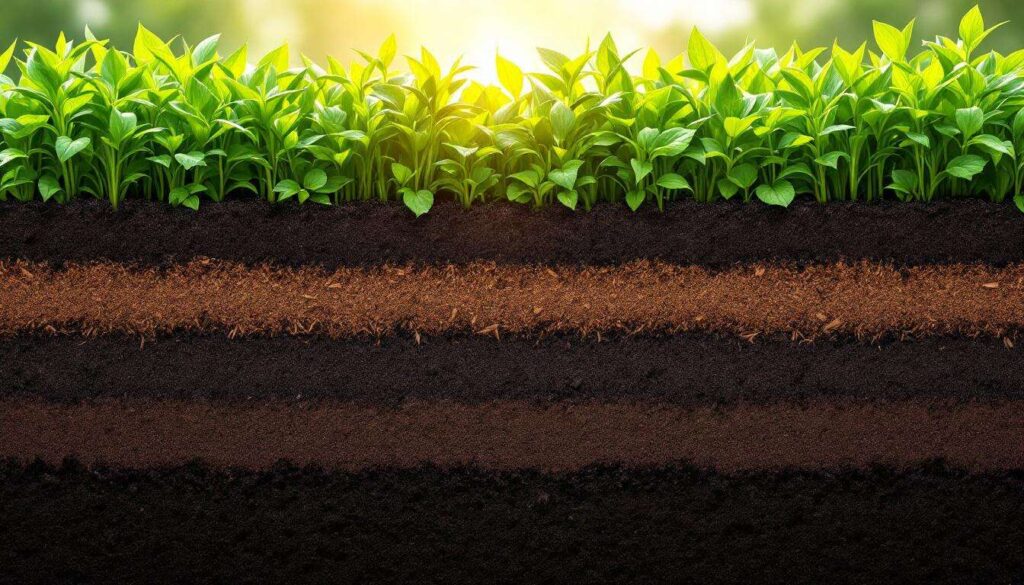
Gardeners seeking to restore vitality to depleted soils are increasingly turning to layered composting techniques that work with nature rather than against it. This approach transforms organic waste into a rich, living medium that feeds plants whilst simultaneously building long-term soil health. By stacking materials in thoughtful sequences, practitioners create an environment where microorganisms thrive, breaking down organic debris into nutrients that plants can readily absorb. The method requires minimal equipment, relies on readily available materials, and delivers results that synthetic amendments struggle to replicate.
The principles of the compost-layer method
Understanding the fundamental structure
The compost-layer method operates on the principle of creating alternating zones of carbon-rich and nitrogen-rich materials that decompose at complementary rates. This technique, often called sheet mulching or lasagne gardening, mimics the natural layering found on forest floors where fallen leaves, twigs, and organic debris accumulate and gradually transform into humus.
The foundation typically begins with a weed-suppressing barrier of wet cardboard or several sheets of newspaper laid directly onto existing grass or soil. This base layer smothers unwanted vegetation whilst allowing water and beneficial organisms to pass through. Above this, gardeners alternate between:
- Carbon-rich “brown” materials such as dried leaves, straw, shredded paper, or wood chips
- Nitrogen-rich “green” materials including fresh grass clippings, kitchen scraps, coffee grounds, or manure
- Thin layers of garden soil or finished compost to introduce decomposer organisms
Achieving optimal carbon-to-nitrogen ratios
The effectiveness of layered composting depends heavily on maintaining proper carbon-to-nitrogen balance. Microorganisms responsible for decomposition require approximately 25 to 30 parts carbon for every part nitrogen to function efficiently. Too much carbon slows decomposition, whilst excess nitrogen can create anaerobic conditions and unpleasant odours.
| Material type | Carbon : nitrogen ratio | Layer depth recommendation |
|---|---|---|
| Dried leaves | 50 : 1 | 5–7 cm |
| Fresh grass clippings | 20 : 1 | 3–4 cm |
| Kitchen vegetable scraps | 15 : 1 | 2–3 cm |
| Straw | 75 : 1 | 7–10 cm |
| Well-aged manure | 20 : 1 | 2–3 cm |
By understanding these ratios, gardeners can adjust their layering to compensate for available materials, ensuring that decomposition proceeds at a steady pace.
These foundational principles create the conditions necessary for organic matter to transform into soil-enriching compounds that dramatically improve nutrient availability.
The impact of organic matter on nutrient retention
How humus increases cation exchange capacity
As organic materials decompose, they eventually form humus, a stable, dark substance that represents the end stage of organic matter breakdown. Humus possesses a remarkable ability to hold onto nutrients that would otherwise leach away through sandy soils or become locked in unavailable forms in clay. This capacity stems from humus’s negatively charged surfaces that attract and retain positively charged nutrient ions such as calcium, magnesium, potassium, and ammonium.
The cation exchange capacity (CEC) measures soil’s ability to hold these essential nutrients. Soils rich in organic matter can have CEC values several times higher than depleted soils, meaning they function as nutrient reservoirs that release minerals gradually as plants require them.
Improving soil structure and water dynamics
Beyond chemical benefits, organic matter fundamentally alters soil physical properties. Decomposing materials and the sticky substances produced by soil microorganisms bind mineral particles into aggregates, creating pore spaces that improve both aeration and water infiltration. These structural improvements benefit plants in multiple ways:
- Enhanced root penetration through looser, less compacted soil
- Increased oxygen availability for root respiration and beneficial aerobic organisms
- Better drainage in heavy clay soils, reducing waterlogging risks
- Improved moisture retention in sandy soils, reducing irrigation requirements
Research indicates that organic matter can hold water at rates between four and twenty times its own weight, functioning as a biological sponge that buffers plants against both drought and excessive rainfall.
Understanding how to construct effective layers that deliver these benefits requires attention to timing and material selection.
Practical layer recipes and seasonal timetable
Autumn preparation for spring planting
Constructing compost layers in autumn provides ideal timing for spring gardens. The cooler, moister conditions favour steady decomposition without the rapid breakdown that can temporarily lock up nitrogen. A typical autumn recipe includes:
- Base layer: wet cardboard or 8–10 sheets of newspaper
- First brown layer: 7–10 cm of dried autumn leaves or straw
- First green layer: 3–5 cm of kitchen scraps or fresh grass clippings
- Second brown layer: 5–7 cm of shredded paper or additional leaves
- Second green layer: 2–3 cm of aged manure or compost
- Top layer: 3–5 cm of finished compost or garden soil
This configuration typically reaches 25–30 cm in total depth and will settle to approximately half that height by spring, creating a planting-ready bed.
Summer and winter adaptations
Summer layering requires careful moisture management as rapid decomposition can generate heat and dry out materials quickly. Gardeners should use thinner layers, incorporate more green materials, and water thoroughly between each addition. Winter construction works best with coarser browns that create air pockets, preventing anaerobic compaction under snow or heavy rain.
| Season | Primary materials | Key consideration |
|---|---|---|
| Autumn | Fallen leaves, garden debris | Optimal decomposition timing |
| Winter | Coarse browns, aged manure | Maintain aeration |
| Spring | Fresh greens, early clippings | Quick nutrient release |
| Summer | Grass clippings, kitchen waste | Moisture retention |
Successful implementation of these recipes depends on ongoing maintenance practices that preserve and enhance organic matter levels.
Techniques to build and maintain soil organic matter
Continuous addition strategies
Maintaining soil organic matter requires regular replenishment because decomposition continuously breaks down existing materials. Effective gardeners adopt multiple strategies to ensure steady organic matter inputs:
- Top-dressing established beds with 2–3 cm of compost twice yearly
- Leaving crop residues in place after harvest rather than removing them
- Growing cover crops during fallow periods to add green manure
- Applying mulch layers that gradually incorporate into soil
- Rotating deep-rooted plants that bring up subsoil minerals
Protecting existing organic matter
Preservation proves equally important as addition. Excessive tillage accelerates organic matter breakdown by exposing previously protected materials to oxygen and disrupting fungal networks. No-dig approaches, including the compost-layer method, protect existing organic matter whilst adding new materials at the surface where natural soil processes gradually incorporate them.
Keeping soil covered with living plants or mulch also reduces erosion and moderates temperature fluctuations that can accelerate decomposition rates beyond beneficial levels.
Before applying organic materials, understanding their transformation processes helps gardeners time applications for maximum benefit.
Transformations of organic debris before application to soil
The decomposition timeline
Organic materials undergo distinct phases of breakdown that determine their suitability for different applications. Fresh materials high in nitrogen decompose rapidly, generating heat and potentially harming plant roots if applied directly. This initial phase, dominated by bacteria, typically lasts two to four weeks and breaks down easily digestible compounds.
The second phase involves fungi and actinomycetes that tackle tougher materials like cellulose and lignin. This slower process, lasting several months, produces stable humus compounds. Understanding these phases allows gardeners to match material maturity to plant needs:
| Decomposition stage | Duration | Best application |
|---|---|---|
| Fresh materials | 0–2 weeks | Hot composting, layer bases |
| Active decomposition | 2–12 weeks | Mulching, autumn preparation |
| Mature compost | 3–6 months | Seed starting, transplanting |
| Finished humus | 6–12 months | All applications |
Pre-composting versus direct layering
Gardeners can choose between pre-composting materials in dedicated bins before layering, or building layers with fresh materials and allowing in-situ decomposition. Pre-composting offers greater control over the process, eliminates weed seeds, and produces uniform material. Direct layering requires less handling, works well for large volumes, and creates habitat for beneficial organisms throughout the decomposition process.
Both approaches deliver valuable organic matter, with the choice depending on available space, time constraints, and specific garden conditions.
These transformative processes ultimately deliver benefits that extend beyond individual gardens to broader environmental and economic systems.
The ecological and economic benefits of enriching soil with organic matter
Carbon sequestration and climate impact
Soil enrichment through organic matter addition plays a significant role in carbon sequestration. When organic materials decompose into stable humus, carbon that was recently in the atmosphere becomes locked in soil for decades or even centuries. Well-managed soils can store substantially more carbon than degraded counterparts, making organic gardening practices valuable climate mitigation tools.
Additionally, diverting organic waste from landfills prevents methane generation, a greenhouse gas with warming potential many times greater than carbon dioxide. By composting kitchen scraps and garden debris, households reduce their environmental footprint whilst creating valuable soil amendments.
Financial advantages for gardeners
The economic case for organic soil enrichment proves equally compelling. Gardeners who produce their own compost and use layering methods reduce or eliminate expenditure on:
- Synthetic fertilisers that require repeated applications
- Purchased compost and soil amendments
- Herbicides for weed control, as mulch layers suppress unwanted plants
- Irrigation costs, thanks to improved water retention
- Waste disposal fees for organic materials
Over multiple growing seasons, these savings accumulate substantially whilst simultaneously improving soil quality in ways that synthetic inputs cannot replicate. The self-reinforcing cycle of organic matter addition creates increasingly fertile soil that requires fewer external inputs each year.
Communities that adopt these practices collectively benefit from reduced waste management costs, improved local food security, and enhanced urban green spaces that support biodiversity and human wellbeing.
The compost-layer method represents a practical synthesis of ecological principles and gardening pragmatism. By working with natural decomposition processes, gardeners create living soils that sustain plant health, sequester carbon, and reduce reliance on external inputs. The technique’s flexibility accommodates various climates, materials, and scales whilst delivering consistent improvements in soil structure and nutrient retention. As understanding of soil biology deepens, these time-tested approaches gain renewed relevance for sustainable food production and environmental stewardship.