


Cultivating herbs at home has become increasingly popular among gardeners seeking fresh flavours and sustainable produce. However, many overlook a crucial aspect of herb cultivation: proper pruning. Understanding how to cut herbs correctly can dramatically transform plant health, encourage vigorous growth, and substantially increase harvests. This practice goes beyond simple maintenance, acting as a catalyst for bushier, more productive plants that deliver superior flavour and aroma throughout the growing season.
Why to prune herbs for better growth
Breaking apical dominance for bushier plants
Herbs naturally exhibit apical dominance, a growth pattern where the main stem grows upwards whilst suppressing lateral bud development. When left unpruned, herbs become tall and leggy with sparse foliage concentrated at the top. By removing the growing tip through pruning, gardeners effectively redirect growth hormones to dormant lateral buds along the stem. This process stimulates multiple side shoots to emerge, creating a fuller, bushier plant with significantly more harvestable leaves.
Increasing leaf production and harvest yield
Regular pruning creates a compounding effect on herb productivity. Each cut encourages the development of two or more new stems, exponentially increasing the number of growing points. This multiplication of stems directly translates to:
- Greater leaf surface area available for photosynthesis
- More harvestable material per plant
- Extended harvest periods throughout the season
- Improved plant vigour and resilience
Research demonstrates that properly pruned herbs can produce three to four times more foliage compared to unpruned counterparts over a growing season.
Preventing premature flowering and bolting
When herbs begin flowering, they channel energy away from leaf production towards seed development. This biological shift causes leaves to become bitter and less aromatic, diminishing culinary quality. Strategic pruning delays this flowering process by removing flower buds before they fully develop, keeping plants in their vegetative growth phase longer. This maintenance ensures herbs continue producing tender, flavourful leaves rather than diverting resources to reproduction.
Understanding these fundamental benefits sets the foundation for implementing specific pruning strategies tailored to different herb varieties.
When and how to prune common herbs
Optimal timing for pruning sessions
Timing significantly influences pruning success. The late morning presents the ideal window, after dew has evaporated but before afternoon heat stress. This timing allows cut surfaces to seal quickly, reducing disease risk. During the growing season, establish a regular pruning schedule rather than sporadic heavy cuts. The golden rule: never remove more than one-third of the plant’s total growth in a single session, as excessive pruning can shock plants and impede recovery.
Pruning soft-stemmed herbs
Soft herbs like basil, mint, coriander, and oregano respond exceptionally well to frequent light pruning. These herbs benefit from the pinching method, where you remove the top growing tip just above a set of leaves. For these varieties:
- Begin pruning when plants reach 15-20 centimetres in height
- Pinch or cut just above a leaf node where two leaves emerge
- Remove stems rather than individual leaves for optimal regrowth
- Harvest regularly, taking stems from the top downwards
Basil particularly thrives with aggressive pruning, becoming increasingly productive with each cutting cycle.
Managing woody and semi-woody herbs
Herbs such as rosemary, thyme, sage, and lavender require a different approach due to their woody stem structure. These plants develop permanent woody bases that do not regenerate new growth if cut too severely. When pruning woody herbs:
| Herb type | Pruning depth | Frequency | Best season |
|---|---|---|---|
| Rosemary | Green growth only | 2-3 times yearly | Spring and summer |
| Thyme | Upper third | After flowering | Late spring |
| Sage | Avoid woody stems | Annually | Early spring |
| Lavender | Green shoots only | Twice yearly | Spring and post-flowering |
Always cut into green, flexible growth rather than brown woody sections, as cuts into old wood rarely produce new shoots.
Special considerations for root-based herbs
Parsley, coriander, and similar herbs that grow from a central crown require cutting at the base rather than tip pruning. Remove entire outer stems at soil level, allowing the central growing point to continue producing new foliage. This method maintains plant energy whilst providing substantial harvests.
With timing and variety-specific techniques established, attention turns to the practical methods that ensure successful pruning outcomes.
Effective pruning techniques
The pinching method for vigorous growth
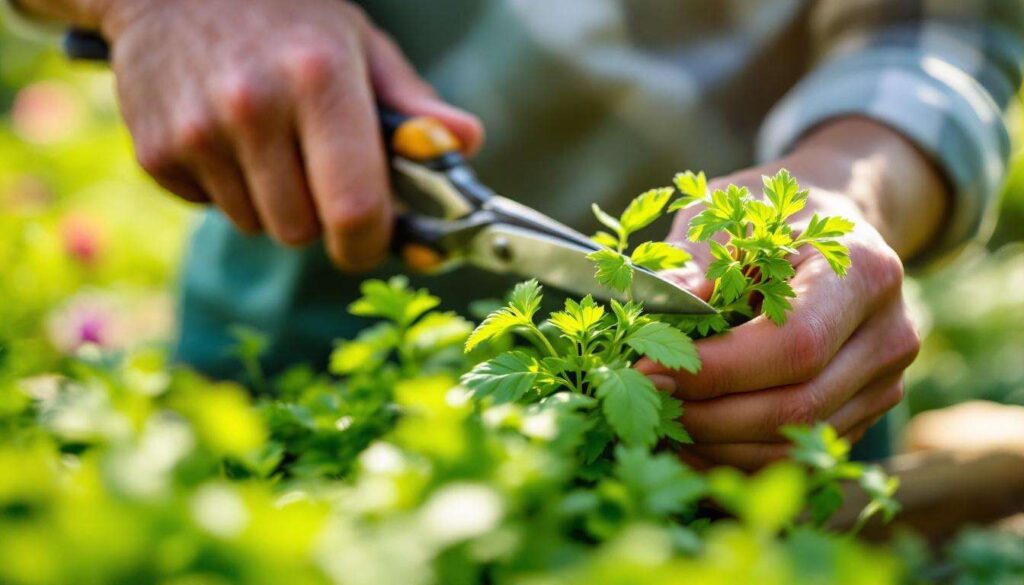
Pinching represents the most fundamental pruning technique, ideal for soft-stemmed annual herbs. Using thumb and forefinger, simply pinch out the growing tip just above a leaf node. This method requires no tools and can be performed quickly during routine garden inspections. The technique proves particularly effective for:
- Encouraging bushiness in young plants
- Quick harvests of small quantities
- Removing flower buds before they develop
- Maintaining compact growth in container herbs
Heading back for shape and structure
Heading involves cutting stems back to a specific length, creating a more uniform plant shape. This technique works well when herbs have become unruly or lopsided. Cut stems at varying heights to create a natural appearance whilst promoting multiple branching points. Always make cuts just above leaf nodes at a slight angle to prevent water accumulation on cut surfaces.
Thinning for improved air circulation
Dense herb growth can create conditions favouring fungal diseases and pest infestations. Thinning removes entire stems at their base, opening up the plant canopy to improve air movement and light penetration. Focus on removing:
- Crossed or rubbing stems
- Weak or spindly growth
- Stems growing towards the plant centre
- Damaged or diseased material
This selective removal directs plant energy towards remaining healthy stems, resulting in more vigorous growth and reducing disease pressure.
Deadheading to extend productive life
Removing spent flowers before seed formation keeps herbs producing leaves rather than seeds. Deadheading proves essential for maintaining leaf quality and flavour. Regularly inspect plants for emerging flower buds and remove them promptly. This practice extends the harvest window by weeks or even months, particularly valuable for annual herbs that would otherwise complete their lifecycle quickly.
Mastering these techniques requires appropriate tools and strict hygiene practices to protect plant health.
Essential tools and hygiene when pruning
Selecting the right cutting implements
Tool selection impacts both cutting precision and plant recovery. For herb pruning, maintain a collection of sharp, clean cutting tools appropriate for different tasks:
- Bypass secateurs for woody stems up to 1 centimetre diameter
- Herb scissors or shears for soft stems and bulk harvesting
- Sharp kitchen scissors for delicate pinching work
- Pruning snips for precision cuts in tight spaces
Avoid anvil-style cutters that crush stems rather than making clean cuts. Sharp blades create smooth cuts that heal quickly, whilst dull tools tear tissue, creating entry points for pathogens.
Maintaining tool hygiene between cuts
Disease transmission between plants represents a significant risk during pruning sessions. Implement strict hygiene protocols to prevent spreading infections:
| Cleaning method | Effectiveness | Application |
|---|---|---|
| Isopropyl alcohol (70%) | Excellent | Quick wipe between plants |
| Bleach solution (1:10) | Excellent | Deep cleaning, requires rinsing |
| Boiling water | Good | Metal tools only |
| Commercial disinfectant | Variable | Follow product instructions |
Disinfect tools between different herb varieties and always after cutting diseased material. Allow tools to dry completely before storage to prevent rust and bacterial growth.
Sharpening and maintenance routines
Regular sharpening maintains cutting efficiency and reduces plant stress. Establish a maintenance schedule that includes sharpening after every 4-6 hours of use. Use appropriate sharpening stones or files designed for your specific tool type. Well-maintained tools make cleaner cuts with less effort, improving both results and user comfort during extended pruning sessions.
Proper tools and hygiene create the foundation for implementing strategies that maximise both flavour intensity and overall yield.
Tips to maximise flavour and yield
Harvesting during peak flavour windows
Essential oil concentration in herbs fluctuates throughout the day, directly affecting flavour intensity. Morning harvesting, just after dew evaporation but before midday heat, captures herbs at their aromatic peak. At this time, plants have replenished moisture overnight whilst essential oils remain concentrated in leaves rather than volatilised by heat.
Strategic pruning for continuous production
Implement a rotation system that ensures constant availability whilst allowing plants adequate recovery time. Rather than harvesting heavily from one plant, take moderate amounts from multiple plants in sequence. This approach maintains productive capacity across your entire herb collection whilst preventing exhaustion of individual specimens.
Balancing vegetative and reproductive growth
Understanding each herb’s growth cycle enables strategic intervention. Annual herbs naturally progress towards flowering, whilst perennials balance vegetative and reproductive phases. Key strategies include:
- Removing flower buds immediately upon appearance
- Increasing pruning frequency as temperatures rise
- Allowing some flowering late in season for seed collection
- Pruning perennials hard in early spring to refresh growth
Feeding and watering to support pruning
Pruned plants require additional resources to support regrowth. Supplement with balanced liquid fertiliser every two weeks during active growth periods. Maintain consistent soil moisture without waterlogging, as stressed plants recover slowly from pruning. Adequate nutrition ensures rapid regeneration of harvested material whilst maintaining flavour quality.
Growing herbs successfully requires understanding that regular, informed pruning transforms modest plants into productive powerhouses. By breaking apical dominance through strategic cuts, gardeners multiply harvest potential whilst maintaining superior flavour profiles. The techniques outlined provide a framework adaptable to various herb types, from soft annuals to woody perennials. Proper timing, appropriate tools, and strict hygiene practices protect plant health whilst maximising yields. Whether cultivating a windowsill collection or an extensive garden, these pruning principles ensure abundant, aromatic harvests throughout the growing season and beyond.