


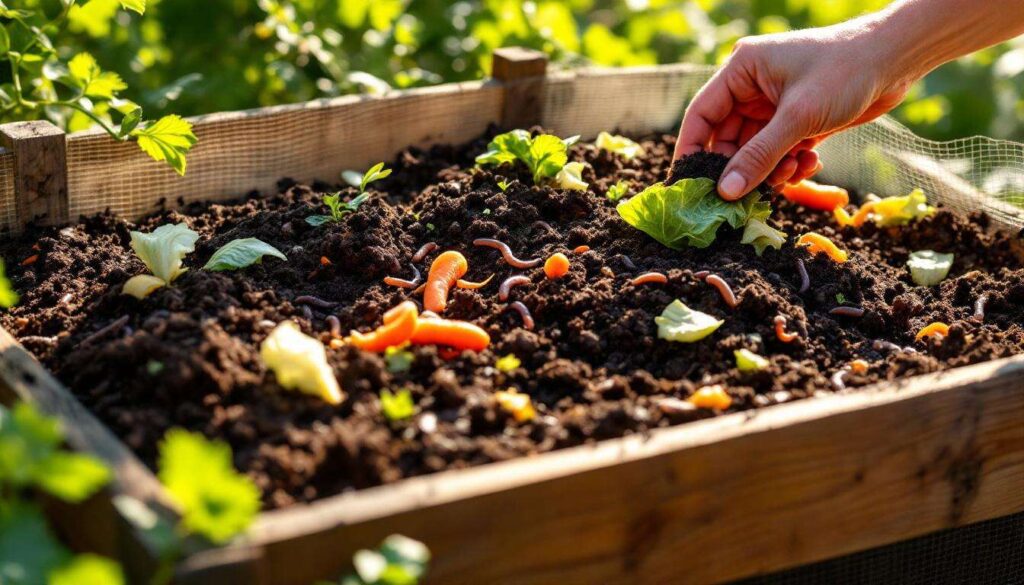
Transforming kitchen waste into nutrient-rich soil amendment represents one of the most practical steps towards sustainable living. Vegetable scraps, often discarded without a second thought, hold tremendous potential when properly composted. The secret to unlocking this potential lies in understanding how strategic layering accelerates the natural decomposition process, turning what might be rubbish into gardening gold within weeks rather than months.
Why is composting vegetable scraps beneficial ?
Composting vegetable waste delivers substantial environmental and practical advantages that extend far beyond simple waste reduction. Organic materials constitute more than half of typical household rubbish, and diverting these scraps from landfills significantly reduces methane emissions whilst creating valuable resources for gardens and allotments.
Environmental impact and waste reduction
When vegetable peelings, cores, and trimmings decompose in landfills, they generate methane, a greenhouse gas considerably more potent than carbon dioxide. By composting these materials at home, gardeners actively contribute to climate change mitigation whilst simultaneously producing a soil conditioner that eliminates the need for chemical fertilisers. This dual benefit makes composting an exceptionally efficient sustainability practice.
Nutritional value for soil and plants
Finished compost from vegetable scraps provides essential nutrients and beneficial microorganisms that improve soil structure, water retention, and plant health. Unlike synthetic fertilisers, compost releases nutrients gradually, creating sustained nourishment for plants whilst enhancing the soil’s ability to support diverse microbial life. The resulting humus-rich amendment transforms even poor-quality soil into a thriving growing medium.
Understanding these benefits establishes why proper composting techniques matter, particularly when it comes to structuring materials for optimal decomposition.
The basics of layering compost
The layering method, often referred to as lasagne composting, relies on alternating distinct material types to create ideal conditions for microbial activity. This structured approach ensures that decomposition occurs efficiently and uniformly throughout the pile.
The lasagne structure explained
Effective layering begins with a foundation layer of coarse materials such as twigs or small branches, typically 10-15 centimetres deep. This base layer serves a critical drainage function, preventing waterlogging whilst allowing air circulation from below. Above this foundation, gardeners should alternate between:
- Green layers comprising nitrogen-rich materials such as vegetable peelings, coffee grounds, and fresh plant trimmings (5-8 centimetres thick)
- Brown layers containing carbon-rich materials like shredded cardboard, dry leaves, or straw (5-8 centimetres thick)
- A top brown layer that acts as a cover, retaining moisture whilst discouraging pests
Why layering accelerates decomposition
This alternating pattern creates optimal conditions for aerobic bacteria, the primary decomposers in healthy compost. The green layers provide nitrogen and moisture, fuelling microbial growth, whilst brown layers supply carbon for energy and create air pockets that prevent anaerobic conditions. The result is a thermophilic composting process that generates heat between 45 and 65 degrees Celsius, dramatically speeding decomposition whilst destroying weed seeds and pathogens.
Mastering these fundamental layering principles sets the stage for implementing more refined structural techniques.
How to effectively structure your compost
Beyond basic layering, the physical arrangement and preparation of materials significantly influence composting success. Attention to particle size, pile dimensions, and material preparation can reduce composting time from months to mere weeks.
Preparing vegetable scraps for composting
Chopping or shredding vegetable waste into smaller pieces, ideally 2-5 centimetres, dramatically increases surface area available for microbial colonisation. Whole vegetables or large peels decompose much slower than chopped materials. Coffee grounds, whilst excellent nitrogen sources, should always be mixed with absorbent browns like cardboard to prevent clumping and maintain proper aeration.
Optimal pile dimensions and construction
Compost piles require sufficient mass to generate and retain heat. The ideal dimensions are:
| Dimension | Measurement | Purpose |
|---|---|---|
| Minimum volume | 1 cubic metre | Adequate heat generation |
| Maximum height | 1.5 metres | Prevents compaction |
| Width | 1-1.5 metres | Manageable turning |
Piles smaller than one cubic metre struggle to maintain thermophilic temperatures, whilst excessively large piles become difficult to manage and may compact, restricting airflow.
Adding microbial inoculants
Introducing microbial activators jumpstarts decomposition in new piles. Mature compost, garden soil, or nitrogen-rich plants such as nettles and comfrey provide diverse bacterial populations that colonise fresh materials rapidly. A thin layer of finished compost between each green-brown sandwich introduces billions of beneficial microorganisms.
With structure established, maintaining the correct balance between material types becomes the next crucial consideration.
Balancing green and brown materials
The carbon-to-nitrogen ratio fundamentally determines composting efficiency. Achieving the ideal balance ensures rapid decomposition without unpleasant odours or nutrient loss.
Understanding the carbon-nitrogen ratio
Microorganisms require approximately 25 to 30 parts carbon for every part nitrogen to function optimally. This ratio provides sufficient energy (carbon) whilst maintaining adequate protein (nitrogen) for microbial reproduction. Green materials typically contain high nitrogen levels, whilst browns supply concentrated carbon.
Categorising compost materials
Common vegetable scraps and their classifications include:
- Greens (nitrogen-rich): vegetable peelings, fruit scraps, coffee grounds, fresh grass clippings, tea leaves
- Browns (carbon-rich): shredded cardboard, dry leaves, straw, wood chips, paper, sawdust
Adjusting ratios in practice
Whilst the 25-30:1 ratio sounds precise, practical composting rarely requires exact measurements. A reliable rule of thumb involves using equal volumes of greens and browns, as browns are typically less dense than greens. If the pile becomes slimy or develops ammonia odours, add more browns. If decomposition stalls and the pile remains cool, incorporate additional greens.
Proper material balance works in tandem with environmental conditions to drive decomposition forward.
Managing moisture and aeration for quick decomposition
The fundamental trio of moisture, oxygen, and temperature determines composting speed. Careful management of these factors transforms sluggish piles into efficient decomposition systems.
Achieving optimal moisture levels
Compost should maintain moisture comparable to a wrung-out sponge—damp but not dripping. The sponge test provides a simple assessment: squeeze a handful of compost firmly. If water streams out, the pile is too wet; if no moisture appears, it requires watering. Ideal moisture content sits between 40 and 60 percent, supporting microbial activity without creating anaerobic conditions.
Aeration techniques and schedules
Oxygen sustains aerobic bacteria responsible for hot, efficient composting. Without adequate air circulation, anaerobic bacteria dominate, producing foul-smelling compounds and slowing decomposition dramatically. Turn the pile every 7 to 14 days, moving outer materials to the centre where temperatures peak. This practice redistributes moisture, introduces fresh oxygen, and ensures uniform decomposition throughout the pile.
Temperature monitoring and management
Thermophilic composting occurs between 55 and 65 degrees Celsius, the range where decomposition proceeds most rapidly whilst pathogens and weed seeds are destroyed. A compost thermometer inserted 30 centimetres into the pile’s centre provides accurate readings. If temperatures drop below 45 degrees, the pile may need:
- Additional nitrogen-rich greens to fuel microbial activity
- Increased moisture if materials have dried out
- Turning to reintroduce oxygen and redistribute heat
Even with optimal conditions, occasional issues arise that require troubleshooting.
Solving problems with odours and pests
Unpleasant smells and unwanted visitors signal imbalances in the composting system. Fortunately, most problems have straightforward solutions.
Addressing foul odours
Ammonia or rotten egg smells indicate anaerobic decomposition, typically caused by excess moisture or insufficient aeration. Remedy these odours by immediately adding dry brown materials and thoroughly turning the pile. If putrid smells persist, the pile likely contains inappropriate materials such as meat or dairy products, which should never enter vegetable-based compost systems.
Deterring flies and other pests
Fruit flies congregate around exposed food waste, whilst rodents may investigate poorly managed piles. Prevention strategies include:
- Burying fresh vegetable scraps beneath 10-15 centimetres of brown material
- Maintaining a permanent brown layer atop the pile
- Avoiding meat, fish, dairy, and oily foods entirely
- Using enclosed bins in areas with persistent pest problems
Managing excess moisture or dryness
Waterlogged compost develops anaerobic pockets and may leach nutrients. Add absorbent browns like shredded cardboard or dry leaves, then turn thoroughly. Conversely, excessively dry piles halt decomposition as microorganisms become dormant. Water the pile whilst turning, ensuring moisture distributes evenly throughout all layers.
Composting vegetable scraps through strategic layering transforms kitchen waste into valuable soil amendment whilst reducing environmental impact. The alternating green-brown structure, combined with attention to moisture, aeration, and temperature, accelerates decomposition from months to weeks. Maintaining the carbon-nitrogen balance prevents odours and ensures efficient microbial activity. When problems arise, simple adjustments to material ratios or pile management restore optimal conditions. This systematic approach converts everyday vegetable peelings into nutrient-rich humus that nourishes gardens and supports sustainable living practices.