


Transforming a modest outdoor space into a thriving wildlife haven requires neither vast resources nor extensive gardening expertise. A simple bucket, strategically positioned and thoughtfully prepared, can become a vibrant aquatic ecosystem that supports local biodiversity whilst adding visual interest to any garden. This accessible approach to water gardening demonstrates that even the smallest intervention can yield significant environmental rewards.
Why choose a mini pond in your garden
Space-efficient wildlife support
Traditional garden ponds demand considerable space, excavation work and financial investment. A bucket-based mini pond circumvents these limitations entirely, making water features accessible to urban gardeners, renters and those with compact outdoor areas. This approach proves particularly valuable for balcony gardens, patios and small courtyards where conventional pond installation would be impractical.
Immediate environmental impact
The ecological contribution of even the smallest water feature should not be underestimated. Research from wildlife conservation organisations consistently highlights that garden ponds support more species diversity than any other freshwater habitat type. A mini pond provides:
- Essential drinking water for birds, hedgehogs and insects during dry periods
- Breeding grounds for amphibians experiencing habitat loss
- Hunting territories for beneficial predatory insects
- Vital stepping stones in fragmented urban wildlife corridors
Understanding these ecological advantages naturally leads to exploring the specific benefits that mini ponds deliver to local ecosystems.
The ecological benefits of a mini pond
Supporting declining amphibian populations
Amphibian species across the country face significant population pressures due to habitat destruction and disease. Garden ponds, regardless of size, offer crucial breeding sites for frogs, toads and newts. Even a bucket-sized water body can accommodate tadpole development, with research indicating that container ponds successfully support complete amphibian life cycles when properly maintained.
Creating insect biodiversity hotspots
Aquatic insects represent a cornerstone of garden food webs. Mini ponds attract remarkable insect diversity:
| Insect group | Ecological role | Arrival timeframe |
|---|---|---|
| Pond skaters | Surface predators | Within days |
| Water beetles | Decomposers and predators | 1-2 weeks |
| Dragonflies | Aerial hunters | Following season |
| Mayflies | Water quality indicators | 2-3 months |
Establishing plant-pollinator connections
Aquatic and marginal plants attract pollinators whilst providing shelter for aquatic fauna. Species such as water mint and marsh marigold produce nectar-rich flowers that draw bees, hoverflies and butterflies, creating layered ecological benefits beyond the water itself.
With these ecological advantages established, selecting appropriate materials becomes the practical foundation for success.
Choosing the right bucket to create your pond
Container specifications and materials
Suitable containers must meet specific criteria to function effectively as mini ponds. Capacity represents the primary consideration, with vessels holding between 20 and 80 litres providing optimal conditions. Larger volumes maintain more stable water temperatures and chemistry, whilst remaining manageable for positioning and maintenance.
Material selection influences both longevity and wildlife safety:
- Plastic buckets: lightweight, affordable and widely available, though darker colours prevent excessive algae growth
- Galvanised metal containers: aesthetically pleasing but require thorough weathering to remove zinc compounds toxic to aquatic life
- Ceramic or glazed pots: excellent thermal properties but ensure drainage holes are sealed completely
- Recycled sinks or basins: ideal depth profiles and often feature useful drainage points for overflow management
Essential design features
Effective mini ponds incorporate graduated depth zones to accommodate different species preferences. Creating shallow marginal areas using strategically placed stones or bricks enables invertebrates and amphibians to enter and exit safely, preventing accidental drowning of visiting wildlife.
Having identified suitable containers, attention turns to the construction process itself.
Detailed steps to build a mini pond
Site selection and preparation
Positioning determines long-term success. Partial shade proves optimal, with approximately four to six hours of direct sunlight daily. This balance encourages plant growth whilst preventing excessive water temperature fluctuations and algae proliferation. Avoid locations directly beneath trees, as falling leaves increase maintenance demands and decomposing organic matter depletes oxygen levels.
Construction methodology
The assembly process follows a logical sequence:
- Clean the container thoroughly, removing any chemical residues or contaminants
- Position the bucket at its permanent location before filling, as water weight makes subsequent movement difficult
- Create depth variation by placing clean bricks or stones to form shallow shelves
- Add a base layer of washed gravel or pebbles, approximately 3-5 centimetres deep
- Fill slowly with rainwater collected in water butts, allowing sediment to settle
- If rainwater proves unavailable, fill with tap water and allow to stand for 48 hours before adding plants
Planting strategy
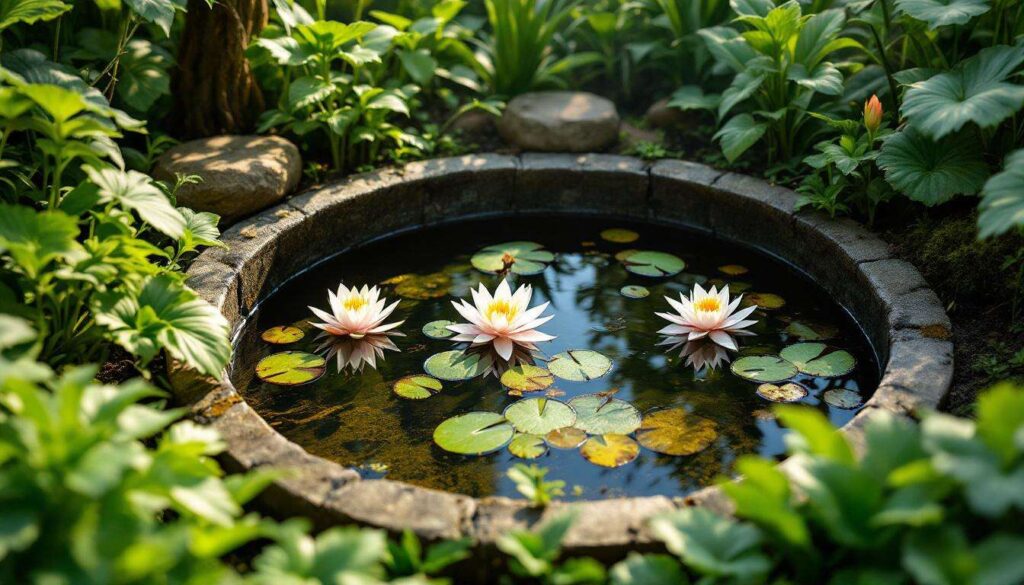
Introduce native aquatic plants using aquatic compost in mesh planting baskets. Suitable species for confined spaces include water forget-me-not, lesser spearwort and miniature water lilies. Aim for approximately one-third surface coverage to maintain ecological balance whilst preserving open water areas.
With construction complete, ongoing care ensures continued ecological function.
Effectively maintaining your mini pond
Seasonal management tasks
Mini ponds require minimal intervention when properly established. Spring maintenance involves removing accumulated debris and dividing overgrown plants. Summer demands periodic topping up with rainwater during dry spells, as evaporation can significantly reduce water levels in small volumes.
Autumn presents the primary maintenance challenge. Falling leaves must be removed promptly to prevent decomposition, which depletes oxygen and releases harmful compounds. Installing netting temporarily during leaf-fall periods reduces this workload considerably.
Water quality management
Avoid the temptation to empty and refill completely, as this disrupts established ecosystems. Instead, remove only a portion of water during cleaning operations, preserving beneficial bacteria and microorganisms. Never use chemical treatments or cleaning agents, as these prove universally harmful to aquatic life.
Thriving mini ponds naturally attract diverse wildlife, which represents the ultimate measure of success.
Attracting local wildlife with your pond
Patience and observation
Wildlife colonisation occurs organically, with flying insects typically arriving first, often within days of filling. Amphibians may take longer, particularly in urban areas with fragmented habitats. Resist introducing animals from other water bodies, as this risks spreading diseases and invasive species.
Enhancing attractiveness
Surrounding habitat significantly influences wildlife visitation. Creating complementary features amplifies your mini pond’s appeal:
- Position log piles nearby to provide terrestrial amphibian shelter
- Plant native wildflowers around the perimeter to attract pollinators
- Ensure adjacent vegetation offers cover for nervous visitors
- Maintain chemical-free gardening practices throughout your outdoor space
Regular observation reveals fascinating behavioural patterns and species interactions, transforming a simple bucket into a window onto complex ecological processes.
Creating a bucket-based mini pond represents an achievable project delivering disproportionate environmental benefits. This approach democratises wildlife gardening, proving that meaningful conservation contributions require neither extensive resources nor specialist knowledge. The combination of immediate visual appeal and genuine ecological value makes mini ponds among the most rewarding garden features, transforming overlooked containers into thriving aquatic ecosystems that support local biodiversity whilst connecting gardeners more intimately with the natural world surrounding them.