


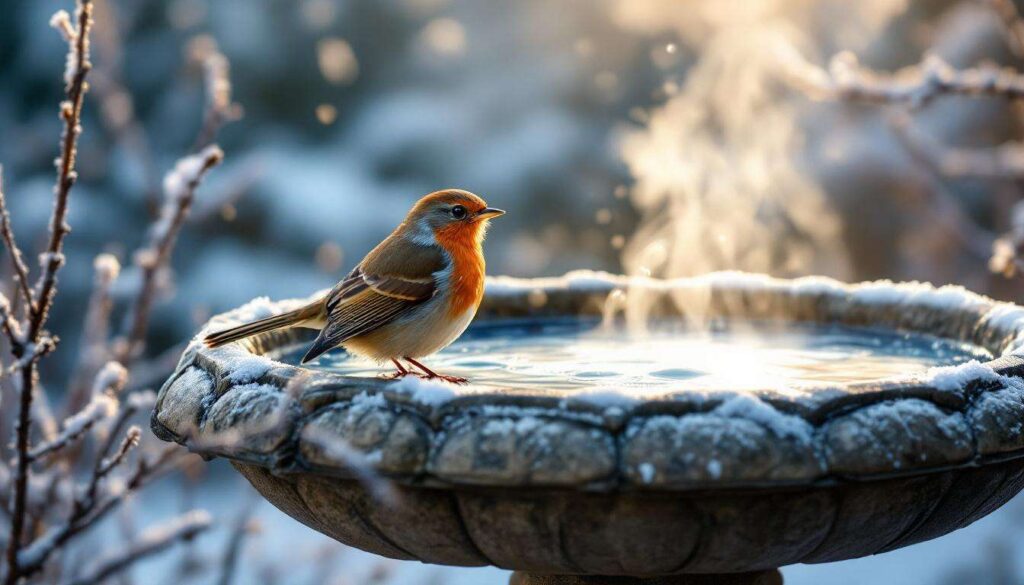
As temperatures plummet across the UK, garden birds face a critical challenge that many homeowners overlook: access to fresh, unfrozen water. Whilst we diligently keep feeders stocked with seeds and suet, the water in our bird baths often transforms into solid ice overnight, leaving our feathered visitors desperately searching for hydration. Fortunately, wildlife experts have developed surprisingly simple solutions that don’t require expensive equipment or constant monitoring. Understanding how to maintain accessible water sources throughout the coldest months can make the difference between survival and struggle for the birds that brighten our winter gardens.
Why does bird bath water freeze in winter ?
The science behind freezing water
Water freezes when temperatures drop to zero degrees Celsius or below, a straightforward physical process that becomes particularly problematic in shallow containers like bird baths. The limited volume of water in these vessels means they lack the thermal mass needed to resist freezing, making them vulnerable even during brief cold snaps.
Several factors accelerate the freezing process in garden bird baths:
- Exposure to wind, which increases heat loss through evaporation and convection
- Clear night skies that allow radiant heat to escape into the atmosphere
- Metal or stone construction materials that conduct cold efficiently
- Shallow depth that provides minimal insulation against ambient temperatures
The impact of prolonged cold spells
During extended periods of freezing weather, bird baths can remain solid ice for days or even weeks. Concrete and ceramic baths are particularly susceptible, as these materials retain cold temperatures and can crack under the expansion pressure of forming ice. The problem intensifies overnight when temperatures reach their lowest point, often resulting in completely frozen water by dawn when birds most urgently need to drink.
Understanding these freezing mechanisms helps explain why traditional approaches sometimes fail and why expert-recommended methods focus on disrupting the freezing process rather than simply adding more water.
The importance of keeping water accessible for birds
Hydration needs during winter
Birds require water throughout the year, but winter presents unique hydration challenges that many people underestimate. Natural water sources such as puddles, streams, and ponds frequently freeze over, eliminating the options that birds rely upon during warmer months. Dehydration can occur surprisingly quickly, particularly for small species with high metabolic rates.
Winter hydration serves multiple essential functions:
- Maintaining body temperature regulation and metabolic processes
- Enabling proper digestion of dry foods like seeds and nuts
- Supporting feather maintenance, crucial for insulation
- Compensating for moisture loss through respiration in cold, dry air
The connection between water and survival
Research has demonstrated that access to unfrozen water significantly improves winter survival rates for garden birds. A study conducted across multiple UK winters found that gardens providing consistent water sources supported 30% more overwintering birds than those offering food alone. This statistic underscores the critical nature of maintaining accessible water during freezing conditions.
| Bird species | Daily water requirement | Survival impact without water |
|---|---|---|
| Blue tit | 5-7ml | Critical after 24 hours |
| Robin | 8-10ml | Severe after 48 hours |
| Blackbird | 15-20ml | Moderate after 72 hours |
These needs become even more pressing when birds consume energy-dense foods that require additional water for proper digestion, making the relationship between feeders and water sources inseparable.
Traditional methods of preventing freezing
Common household approaches
Gardeners have employed various techniques to combat frozen bird baths, with mixed results regarding effectiveness and practicality. The most frequently attempted method involves regularly breaking ice and refilling with warm water, a labour-intensive approach that requires multiple daily interventions during severe cold.
Other traditional methods include:
- Placing a tennis ball in the water to create movement that supposedly delays freezing
- Adding glycerine or salt to lower the freezing point
- Positioning the bath in a sheltered, sunny location
- Using dark-coloured containers to absorb solar heat
- Covering the bath overnight with insulating materials
Limitations of conventional techniques
Whilst some traditional methods offer marginal benefits, most prove inadequate during genuinely cold weather. The tennis ball technique, for instance, only works if wind keeps the ball moving, and it becomes ineffective once ice begins forming around it. Chemical additives pose serious risks to birds, potentially causing illness or death, making them entirely unsuitable despite their freezing-point reduction properties.
Solar positioning helps during sunny days but offers no protection during the long, cold nights when freezing occurs most rapidly. These limitations have prompted wildlife organisations to research more reliable solutions that don’t require constant human intervention or compromise bird safety, leading to the development of expert-endorsed alternatives.
The method recommended by an RSPB expert
The simple floating object technique
RSPB experts recommend placing a small, light ball or piece of wood in the bird bath to prevent complete freezing. The key difference from the tennis ball myth lies in understanding the actual mechanism: the floating object doesn’t prevent freezing through movement but rather creates a weak point in the ice that’s easily broken each morning.
The recommended approach works as follows:
- Select a ping-pong ball, small cork, or piece of untreated wood
- Place it in the centre of a filled bird bath before nightfall
- Allow ice to form naturally around the object overnight
- Remove the floating item in the morning, which creates an immediate opening
- Top up with fresh water through the hole
Why this method proves effective
The floating object creates a thinner section of ice directly beneath it, as the insulating properties of the material slow heat loss in that specific area. When removed, this weak point breaks easily without requiring force that might damage the bath or disturb visiting birds. The technique works reliably even in temperatures well below freezing, provided the intervention occurs before ice becomes too thick.
RSPB experts emphasise that this method’s success depends on morning consistency rather than the specific object used. Any lightweight, bird-safe material that floats reliably will suffice, making this approach accessible to virtually any household without special purchases or equipment.
The advantages of this method over others
Practical benefits for bird welfare
The floating object technique offers several advantages that make it superior to alternative approaches. Unlike heated bird baths that require electrical connections and ongoing energy costs, this method involves zero running expenses and no safety concerns related to outdoor wiring or potential electrical hazards.
Key advantages include:
- No chemicals or additives that could harm birds
- Minimal physical effort compared to repeatedly breaking thick ice
- Works reliably across varying temperature ranges
- Doesn’t require specialised equipment or significant financial investment
- Maintains water quality without contamination
Comparison with commercial solutions
| Method | Initial cost | Running cost | Effectiveness |
|---|---|---|---|
| Floating object | £0 | £0 | High with daily attention |
| Heated bird bath | £30-80 | £15-25 per winter | Very high |
| Solar fountain | £20-50 | £0 | Low in winter |
| Immersion heater | £15-30 | £10-20 per winter | High |
The floating object method particularly suits households seeking environmentally responsible solutions that don’t increase carbon footprints through electrical consumption. For those unable to check the bath daily, combining this technique with a low-wattage immersion heater provides backup protection whilst still reducing energy usage compared to continuous heating.
Practical tips for implementing this trick
Choosing the right floating object
Selecting an appropriate floating item requires consideration of size, material, and safety. The object should be large enough to create a meaningful opening when removed but small enough not to displace excessive water. Ping-pong balls work excellently due to their buoyancy and smooth surface that doesn’t harbour bacteria.
Suitable options include:
- Standard ping-pong balls, which are ideal for most bath sizes
- Natural cork pieces measuring 5-8cm in diameter
- Small pieces of untreated wood without splinters or sharp edges
- Purpose-made floating devices from wildlife suppliers
Establishing an effective routine
Consistency determines success with this method, making it essential to establish a reliable morning routine. Check the bird bath as early as possible, ideally around dawn when birds begin their daily activities. Remove the floating object, break through the thin ice layer if necessary, and replenish with fresh water.
Additional implementation tips:
- Keep a dedicated jug of water indoors to avoid repeated outdoor trips
- Position the bath where it’s easily visible from windows for monitoring
- Use lukewarm rather than hot water to avoid thermal shock to the bath material
- Clean the floating object weekly to prevent algae buildup
- Have backup floating objects available in case one becomes damaged or lost
During extreme cold snaps when temperatures remain below freezing throughout the day, check the bath again at midday and early evening. This ensures birds have multiple opportunities to drink and bathe, particularly important for species with high metabolic demands.
Maintaining accessible water for garden birds during winter requires understanding both the challenges they face and the practical solutions available. The floating object technique recommended by RSPB experts offers a cost-free, environmentally friendly method that works reliably when implemented consistently. By placing a simple ping-pong ball or cork in your bird bath each evening and removing it each morning, you create an easily accessible water source that can significantly improve survival rates for overwintering birds. Combine this approach with regular cleaning, appropriate positioning, and a commitment to daily checks, and your garden will become a vital refuge for birds navigating the harsh winter months. Start implementing this straightforward trick today and observe the difference it makes to your local bird population.