


As the final days of winter approach, gardeners across the UK face a critical window of opportunity. The Royal Horticultural Society’s experts have identified six key plants that require immediate attention before the growing season begins in earnest. Proper pruning now can mean the difference between a garden that merely survives and one that truly thrives throughout the warmer months ahead. Understanding which plants to cut back and how to do so correctly will set the foundation for healthy growth, abundant blooms, and productive harvests in the coming season.
Why pruning in February is crucial for your garden
The science behind late winter pruning
February represents a pivotal moment in the gardening calendar when plants remain dormant but are preparing for their spring awakening. During this period, the absence of leaves makes it significantly easier to assess the structure of woody plants and identify which branches require removal. Sap flow is minimal, which reduces stress on plants and minimises the risk of disease transmission through pruning wounds. The cooler temperatures also mean that fungal spores and bacterial infections are less active, providing a safer environment for making cuts.
Timing advantages for plant health
Pruning during dormancy allows plants to direct their energy efficiently when growth resumes. Rather than supporting damaged, diseased, or poorly positioned branches, plants can channel their resources into producing vigorous new shoots and abundant flowers. The timing also ensures that cuts heal quickly once warmer weather arrives, with fresh growth covering wounds before pests and diseases become prevalent. For many species, delaying pruning beyond February means missing the optimal window, potentially sacrificing an entire season’s display.
Weather considerations
The ideal pruning conditions occur when:
- Temperatures remain above freezing to prevent tissue damage
- Dry weather prevails, reducing infection risks
- Frost is not forecast immediately after pruning
- Wind speeds are moderate, allowing for controlled cutting
Understanding these seasonal dynamics helps explain why RHS experts emphasise the urgency of February pruning tasks, particularly for the six plants they’ve highlighted as priorities.
Essential tools for effective pruning
The pruning toolkit
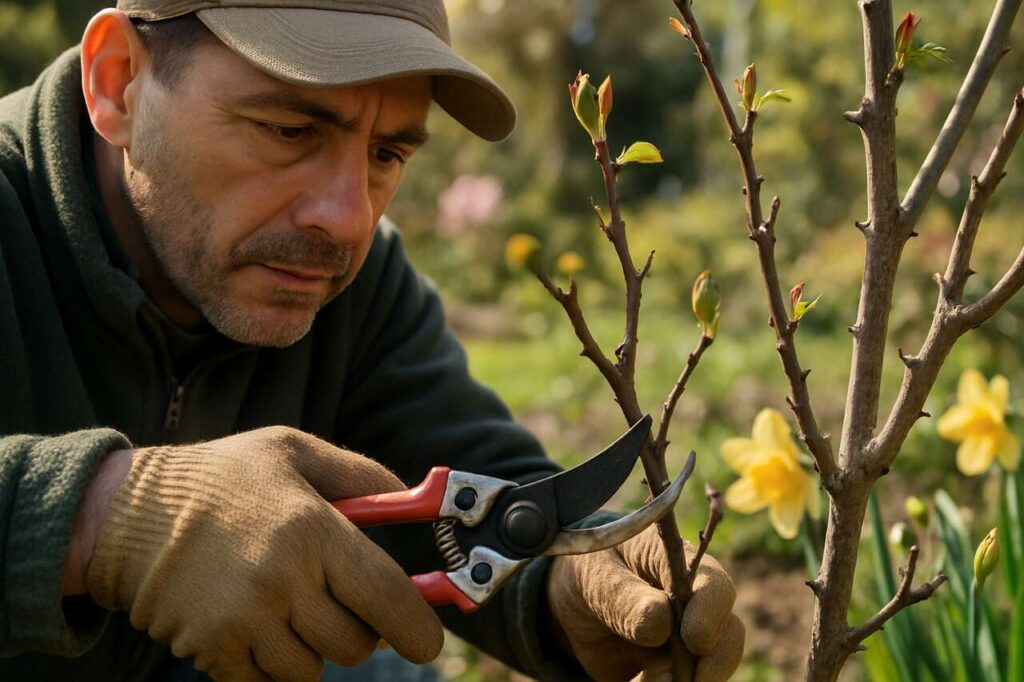
Success in pruning begins with selecting the right equipment for each task. Professional gardeners and RHS specialists recommend maintaining a core collection of tools that address different cutting requirements. Sharp, clean tools make precise cuts that heal quickly, whilst dull blades crush plant tissue and create entry points for pathogens.
| Tool | Best Use | Branch Diameter |
|---|---|---|
| Secateurs | Small stems and shoots | Up to 1.5cm |
| Loppers | Medium branches | 1.5cm to 4cm |
| Pruning saw | Large branches | Over 4cm |
| Hedge shears | Formal hedges | Multiple small stems |
Maintenance and hygiene protocols
The RHS emphasises that tool maintenance is non-negotiable for preventing disease spread between plants. After each use, blades should be cleaned with a disinfectant solution or methylated spirits. Regular sharpening ensures clean cuts rather than ragged tears, and oiling moving parts prevents rust formation during storage. Investing time in tool care directly translates to healthier plants and more efficient pruning sessions.
With the proper equipment prepared and maintained, gardeners can confidently approach the specific pruning requirements of the six priority plants identified by RHS experts.
Roses: how to prepare them for spring
Bush and shrub roses
Hybrid tea roses and floribundas require decisive pruning to produce their characteristic large blooms. The RHS recommends reducing stems to approximately 15-25cm above ground level, cutting to an outward-facing bud. This technique encourages an open, vase-shaped structure that allows air circulation and reduces fungal disease risks. Remove any dead, damaged, or diseased wood entirely, cutting back to healthy tissue identified by its white or pale green interior.
Climbing and rambling roses
These varieties demand different approaches based on their flowering habits:
- Remove one or two of the oldest main stems at the base to encourage new growth
- Shorten side shoots to two or three buds from the main framework
- Tie in new growth to supports, spacing stems evenly
- Eliminate crossing branches that may rub and create wounds
Disease prevention through pruning
February pruning serves a crucial disease management function for roses. By removing material that harboured overwintering fungal spores, gardeners significantly reduce black spot and rust infections. Collecting and disposing of all pruned material prevents reinfection, and a final spray with a winter wash can provide additional protection before new growth emerges.
Beyond roses, fruit trees present another critical February pruning opportunity that directly impacts summer and autumn harvests.
Pruning fruit trees for a better harvest
Apple and pear tree techniques
The RHS identifies top fruit pruning as essential for both productivity and tree health. For established trees, the focus should be on removing the four Ds: dead, diseased, damaged, and crossing branches. This creates an open-centred structure that allows sunlight to penetrate throughout the canopy, improving fruit quality and ripening. Tip-bearing varieties like ‘Bramley’ require minimal pruning, whilst spur-bearing types benefit from shortening lateral branches to encourage fruiting spurs.
Stone fruit considerations
Plums, cherries, and other stone fruits follow different rules due to their susceptibility to silver leaf disease. Whilst February pruning is acceptable, the RHS advises that summer pruning (late July to August) is actually safer for these species. If February work is necessary, focus only on removing obviously dead or damaged wood, and apply wound sealant immediately to minimise infection risks.
Training young fruit trees
For trees in their formative years, February pruning establishes the framework for future productivity:
- Select three to five well-spaced main branches as the permanent framework
- Remove competing leaders to establish a clear central stem
- Shorten selected branches by one-third to encourage branching
- Eliminate narrow-angled crotches that may split under crop weight
Whilst fruit trees demand structural attention, flowering shrubs require a different approach focused on maximising their ornamental display.
Preparing flowering shrubs for a summer bouquet
Late-flowering clematis
Group 3 clematis varieties, which flower on the current season’s growth, benefit from hard pruning in February. The RHS recommends cutting all stems back to approximately 30cm above ground level, just above a pair of strong buds. This seemingly drastic approach prevents plants from becoming bare at the base and encourages vigorous new shoots that will carry abundant flowers from midsummer onwards. Popular varieties like ‘Jackmanii’ and ‘Viticella’ types respond particularly well to this treatment.
Butterfly bush rejuvenation
Buddleja davidii requires confident pruning to prevent it becoming leggy and unproductive. Cut all stems back to 60-90cm from ground level, making cuts just above a pair of buds. This promotes strong new growth that will produce the long flower spikes beloved by pollinators throughout summer. Without this annual hard pruning, butterfly bushes quickly develop into tall, ungainly specimens with flowers only at the tips of bare stems.
Hydrangea pruning strategies
Different hydrangea types require specific approaches:
- Hydrangea paniculata: cut back to a framework 30-60cm high
- Hydrangea arborescens: reduce to 10-20cm above ground
- Mophead and lacecap types: remove only dead flowerheads and weak stems
- Climbing hydrangeas: minimal pruning, removing only damaged growth
Understanding these distinctions ensures that flowering potential is maximised rather than accidentally removed. However, knowing what to do is only part of the equation; understanding what to avoid is equally important.
Practices to avoid when pruning in February
Common timing mistakes
The RHS warns against pruning spring-flowering shrubs during February, as this removes the flower buds that formed the previous summer. Species like forsythia, flowering currant, and early clematis should be left until immediately after flowering. Similarly, evergreen hedges are best left until March or April when growth is beginning and plants can recover quickly from cutting.
Technical errors that compromise plant health
Several cutting mistakes can cause lasting damage:
- Leaving stubs above buds that die back and invite disease
- Cutting too close to buds, causing desiccation and bud death
- Making angled cuts on the wrong side of buds, directing water onto them
- Tearing bark when removing large branches without proper technique
- Over-pruning young plants, which delays establishment
Environmental and safety considerations
The RHS emphasises that bird nesting season begins earlier than many gardeners realise. Always check thoroughly for nests before pruning hedges or dense shrubs, as disturbing nesting birds is both harmful and illegal. Additionally, working in frosty conditions makes plant tissues brittle and more prone to damage, whilst frozen ground makes it difficult to position ladders safely for work on taller specimens.
February’s pruning window offers gardeners a chance to shape the coming season’s success through strategic cuts and careful plant management. The six plants highlighted by RHS experts—roses, apples, pears, clematis, buddleja, and hydrangeas—represent key opportunities to enhance both ornamental displays and productive harvests. Proper timing, appropriate tools, and correct techniques combine to ensure plants enter the growing season with optimal structure and vigour. By understanding what to prune, how to prune it, and crucially what to avoid, gardeners can confidently approach this essential seasonal task. The investment of time during these final winter weeks pays dividends throughout the year, transforming gardens into thriving, productive, and beautiful spaces that reflect both horticultural knowledge and practical skill.