



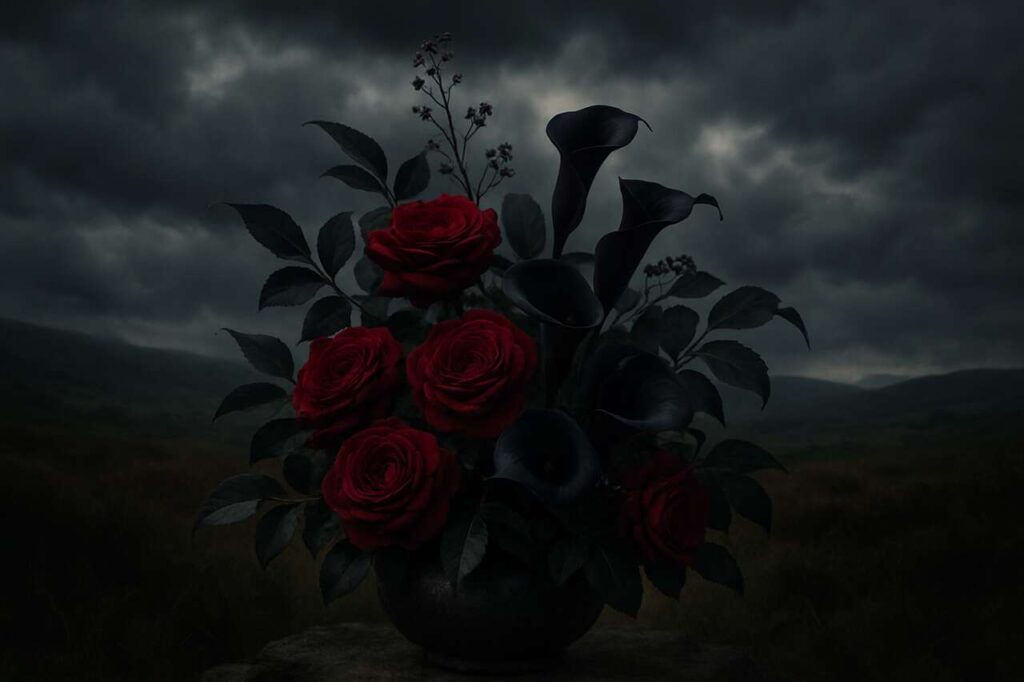
The brooding moors of Emily Brontë’s masterpiece have captivated readers for generations, offering a landscape where passion and darkness intertwine with the raw beauty of nature. This literary classic presents a visual aesthetic that translates remarkably well into contemporary design, particularly through gothic floral arrangements that capture the novel’s tempestuous spirit. The windswept heaths, wild roses clinging to stone walls, and the untamed gardens surrounding the Heights itself provide endless inspiration for those seeking to recreate this distinctive atmosphere. By understanding the elements that define this brooding romanticism, anyone can transform spaces with florals that evoke Catherine and Heathcliff’s tragic tale.
Introduction to the gothic floral style inspired by Wuthering Heights
Understanding the essence of gothic floristry
Gothic floral design draws from Victorian mourning traditions, romantic literature, and the natural wildness of the Yorkshire moors. This style rejects the cheerful brightness of conventional arrangements in favour of moody compositions that suggest mystery, passion, and melancholy. The Wuthering Heights aesthetic specifically emphasises untamed beauty, where flowers appear windswept and slightly dishevelled rather than perfectly manicured.
Key characteristics include:
- Asymmetrical arrangements that mimic natural growth patterns
- Incorporation of thorns, bare branches, and dried elements
- Emphasis on texture over traditional beauty standards
- Seasonal appropriateness reflecting the harsh moorland climate
- Deliberate imperfection suggesting nature’s indifference to human aesthetics
Literary influences on floral symbolism
Brontë’s novel contains numerous references to the landscape and flora surrounding the two houses. Heather, representing solitude and protection, dominates the moors, whilst wild roses symbolise both beauty and pain through their thorns. The contrast between the cultivated gardens at Thrushcross Grange and the wild surroundings of Wuthering Heights provides a blueprint for balancing refinement with rawness in floral design.
These literary foundations inform every decision when crafting arrangements that truly capture the novel’s atmosphere, leading naturally to considerations about which specific flowers best embody this vision.
Choosing floral patterns: balancing romance and mystery
Primary flowers for gothic arrangements
The foundation of any Wuthering Heights-inspired arrangement relies on carefully selected blooms that convey both beauty and darkness. Deep-coloured roses remain essential, particularly varieties in burgundy, purple, and near-black shades. These should appear slightly weathered, with outer petals showing natural ageing rather than pristine perfection.
| Flower type | Symbolic meaning | Colour recommendations |
|---|---|---|
| Roses | Passionate love, sacrifice | Deep red, burgundy, purple |
| Dahlias | Dignity, betrayal | Dark purple, burgundy, black |
| Ranunculus | Radiant charm, attraction | Deep wine, chocolate brown |
| Anemones | Forsaken love, anticipation | Deep purple with dark centres |
| Hellebores | Scandal, anxiety | Dusky pink, deep plum |
Supporting elements and foliage
The supporting cast in gothic arrangements proves equally important as the star blooms. Eucalyptus in seeded or silver varieties adds texture whilst maintaining the moody palette. Blackberries on thorny branches introduce both visual interest and symbolic weight, representing the dangerous nature of forbidden desires.
Essential supporting elements include:
- Scabiosa pods for their architectural dried appearance
- Thistle heads suggesting the Scottish borders and wild landscapes
- Ivy trails representing fidelity and eternal attachment
- Bare twisted branches mimicking windswept trees
- Dried grasses evoking moorland vegetation
- Dark privet berries adding depth and texture
Seasonal considerations for authenticity
Authenticity demands attention to seasonal availability, as the moors change dramatically throughout the year. Autumn and winter arrangements naturally suit this aesthetic, with chrysanthemums, late-season dahlias, and evergreen foliage. Spring interpretations might incorporate dark tulips and fritillaries, whilst summer arrangements could feature deep-toned peonies and garden roses.
Understanding which flowers best convey the gothic romance naturally leads to questions about the colours that will make these arrangements truly atmospheric.
Colour palette: dark tones and elegant contrasts
Foundation colours for gothic arrangements
The Wuthering Heights palette revolves around deep, saturated tones that suggest twilight on the moors rather than bright daylight. Burgundy serves as the primary colour, representing both passion and dried blood, whilst deep purples evoke bruised skies before storms. Near-black flowers, though rare in nature, provide dramatic focal points when available.
Core palette components:
- Burgundy and oxblood reds suggesting aged wine and sacrifice
- Deep plum and aubergine purples for mystery
- Charcoal and slate greys mimicking stone walls
- Rich chocolate browns reflecting earth and decay
- Midnight blues for depth and melancholy
Strategic use of contrast
Whilst darkness dominates, strategic contrasts prevent arrangements from becoming visually flat. Touches of cream or blush pink suggest innocence corrupted or memories of happier times. These lighter elements should appear sparingly, perhaps as a single white rose amongst darker blooms, or pale green foliage providing relief from the intensity.
| Contrast technique | Effect achieved | Application |
|---|---|---|
| Single white bloom | Innocence lost | One white rose amongst dark varieties |
| Pale foliage | Hope or memory | Silver eucalyptus or dusty miller |
| Metallic accents | Coldness, distance | Silver or pewter container elements |
| Dried elements | Passage of time | Bleached grasses or seed heads |
Avoiding common colour mistakes
The gothic floral aesthetic requires restraint to maintain its sophisticated darkness. Avoid bright, cheerful colours entirely, as even small amounts of sunny yellow or vibrant orange destroy the moody atmosphere. Similarly, resist the temptation to add too many contrasting light elements, which can make arrangements appear indecisive rather than deliberately dark.
Once the colour story has been established, the physical qualities of fabrics and materials become crucial for achieving the desired dramatic impact.
Fabrics and textures: the art of draping for dramatic effect
Selecting appropriate textiles
The tactile dimension of gothic floral design extends beyond the flowers themselves to encompass fabric choices that enhance the overall presentation. Velvet remains the quintessential gothic textile, its light-absorbing quality and luxurious texture perfectly complementing dark floral arrangements. Deep burgundy or black velvet table runners create an immediate sense of Victorian opulence and mystery.
Recommended fabrics include:
- Velvet for its rich texture and light-absorbing properties
- Raw silk with irregular slubs suggesting age and wear
- Heavy linen in natural or charcoal tones for rustic authenticity
- Wool felt providing structure and moorland associations
- Distressed lace representing Victorian femininity and decay
- Burlap or hessian for rough, utilitarian contrast
Layering techniques for depth
Creating visual depth through fabric layering mirrors the novel’s complex emotional landscape. Begin with a substantial base layer in dark linen or velvet, then add strategic overlays of contrasting textures. Antique lace draped carelessly across a table suggests forgotten elegance, whilst rough hessian grounds the arrangement in the practical realities of moorland life.
The draping itself should appear somewhat dishevelled and organic rather than perfectly arranged. Allow fabrics to pool naturally, creating shadows and folds that enhance the mysterious atmosphere. This deliberately imperfect styling reflects the windswept, untamed quality of the Heights itself.
Incorporating ribbons and trims
Ribbons serve both practical and aesthetic purposes in gothic arrangements. Wide velvet ribbons in burgundy or black can secure bouquets whilst adding luxurious texture. Frayed silk ribbons suggest age and abandonment, perfect for arrangements meant to evoke the passage of time between Catherine’s death and Heathcliff’s obsessive mourning.
These textile considerations naturally extend to the smaller decorative elements that complete the Wuthering Heights aesthetic.
Accessories and details: incorporating Victorian aesthetics
Period-appropriate vessels and containers
The containers housing gothic florals must reinforce rather than contradict the overall aesthetic. Antique or antique-style vessels work best, particularly those showing signs of age through tarnish, rust, or patina. Pewter urns, tarnished silver vessels, and dark ceramic pieces all suit this style beautifully.
| Container type | Material | Aesthetic contribution |
|---|---|---|
| Victorian urns | Tarnished silver or pewter | Formal elegance with age |
| Apothecary bottles | Dark glass | Mystery and medicinal associations |
| Stone vessels | Slate or granite | Connection to moorland landscape |
| Weathered metal | Rusted iron or copper | Decay and passage of time |
| Ceramic crocks | Earthenware | Rustic, utilitarian quality |
Decorative elements and embellishments
Small details transform good arrangements into exceptional gothic compositions. Antique keys symbolise secrets and locked rooms, whilst old skeleton keys particularly evoke the novel’s themes of obsession and possession. Vintage brooches, particularly those featuring mourning symbols like black jet or hairwork, can be pinned to ribbons or nestled amongst blooms.
Consider incorporating:
- Antique books with worn leather bindings as display bases
- Vintage photographs in tarnished frames suggesting memory
- Old letters or handwritten notes for literary connection
- Candles in dark holders creating atmospheric lighting
- Feathers, particularly crow or raven, for gothic symbolism
- Small taxidermy or natural history specimens for Victorian curiosity
Lighting considerations
Proper lighting proves essential for showcasing gothic floral arrangements effectively. Harsh overhead lighting destroys the mysterious atmosphere, whilst candlelight or warm-toned lamps create shadows that enhance the dramatic quality. Position arrangements where natural light filters through rather than directly illuminating them, mimicking the often-overcast Yorkshire weather.
With all these individual elements understood, the final step involves bringing them together to create a cohesive environment.
Creating an authentic atmosphere: decor and staging
Room preparation and ambience
Transforming a space to reflect Wuthering Heights requires attention to the overall environment, not merely the floral arrangements themselves. Begin by considering the lighting, opting for dim, atmospheric illumination rather than bright, cheerful spaces. Heavy curtains in dark fabrics can be drawn partially closed, allowing filtered light whilst creating a sense of enclosure and intimacy.
Wall treatments matter significantly in establishing authenticity. Dark paint colours in charcoal, deep green, or burgundy provide appropriate backdrops, whilst exposed stone or brick suggests the architectural reality of the Heights. If painting isn’t possible, consider temporary fabric wall hangings in appropriate colours and textures.
Furniture and architectural elements
The furniture surrounding gothic floral displays should reinforce rather than contradict the aesthetic. Dark wood pieces with substantial presence work best, particularly those showing age through wear and patina. Victorian or Gothic Revival furniture proves ideal, but simpler pieces can be adapted through the strategic use of dark fabrics and appropriate styling.
Architectural elements to emphasise:
- Fireplaces as focal points with arrangements on mantels
- Window seats dressed with dark cushions and throws
- Bookshelves filled with leather-bound volumes
- Exposed beams or dark-painted ceilings
- Stone or slate flooring where possible
- Heavy wooden doors and period hardware
Layering multiple arrangements
A single arrangement, however beautiful, cannot fully capture the Wuthering Heights atmosphere. Multiple installations at varying heights and scales create a more immersive experience. Place a substantial arrangement as a focal point, then add smaller compositions on side tables, windowsills, and shelves. This layering mimics how nature distributes flowers across the moors rather than concentrating them in one location.
Consider the viewer’s journey through the space, ensuring that each angle reveals new details and maintains the gothic atmosphere consistently. Arrangements should feel discovered rather than obviously placed, as though wild moorland flowers have somehow found their way indoors.
The Wuthering Heights aesthetic offers a compelling alternative to conventional floral design, embracing darkness, drama, and literary romance. By carefully selecting deep-toned blooms with symbolic resonance, establishing a moody colour palette dominated by burgundies and purples, incorporating luxurious fabrics like velvet, adding Victorian accessories that suggest age and mystery, and creating an atmospheric environment through thoughtful staging, anyone can capture the essence of Brontë’s masterpiece. This approach to gothic floristry celebrates the beauty found in melancholy, the passion within restraint, and the wildness that refuses domestication, much like the characters who inhabit the windswept moors themselves.