

Agriculture faces mounting pressure to adopt practices that safeguard both crop yields and environmental health. Traditional methods relying heavily on plastic mulch and chemical pesticides have proven effective but come at a considerable ecological cost. Biodegradable mulching films represent a promising alternative, offering farmers a way to protect their crops whilst minimising environmental damage and reducing chemical inputs.
Introduction to biodegradable mulching film
What are biodegradable mulching films ?
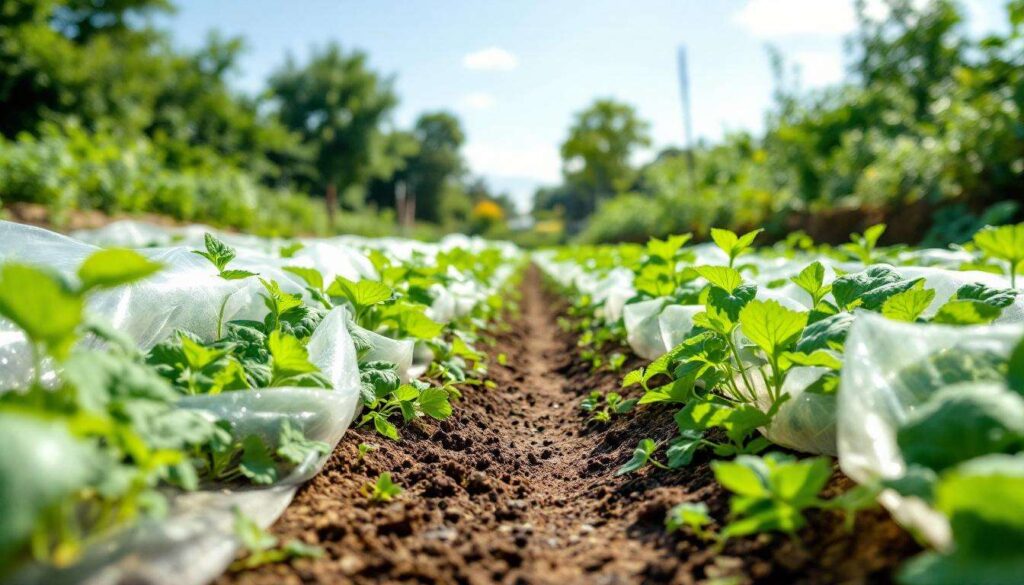
Biodegradable mulching films are protective coverings applied to soil surfaces around plants, designed to decompose naturally over time. Unlike conventional plastic mulch, these films break down through biological processes involving microorganisms, moisture, and environmental conditions. They perform similar functions to traditional plastic films but without leaving persistent residues in the soil.
These innovative materials are typically manufactured from plant-based polymers such as cellulose acetate, polylactic acid, or starch derivatives. Brazilian researchers have recently developed a particularly effective version using cellulose acetate enriched with citronella oil, demonstrating how natural compounds can enhance the protective properties of these films.
Primary functions in agricultural settings
Biodegradable mulching films serve multiple purposes in crop production:
- regulating soil temperature to promote optimal root development
- suppressing weed growth by blocking sunlight from reaching weed seeds
- reducing water evaporation from the soil surface
- protecting crops from certain pests when enhanced with natural repellents
- improving soil structure as they decompose and integrate into the earth
The dual functionality of these films makes them particularly valuable for farmers seeking to reduce their reliance on both plastics and chemical interventions. Understanding their advantages reveals why they’re gaining traction in sustainable agriculture.
The advantages of biodegradable mulching films
Natural decomposition and soil integration
The most significant benefit of biodegradable films lies in their ability to break down naturally. Unlike plastic mulch that requires removal and disposal, these films decompose directly in the field. This process eliminates the labour and costs associated with collecting and disposing of used plastic sheeting whilst simultaneously enriching the soil with organic matter as the film degrades.
Reduction in pesticide dependency
Research has demonstrated that biodegradable films enhanced with natural compounds can significantly reduce pest pressure. Studies on strawberry cultivation showed remarkable results:
| Treatment type | Average whitefly eggs per plant |
|---|---|
| Citronella-enriched biodegradable film | 6 eggs |
| Standard plastic mulch | 30+ eggs |
| No mulch protection | 30+ eggs |
This dramatic reduction in pest infestation translates directly into decreased need for chemical pesticides, offering both economic and environmental benefits.
Cost-effectiveness and labour savings
Whilst the initial purchase price of biodegradable films may be higher than conventional plastic, the overall economic picture is more favourable when considering:
- elimination of removal and disposal costs
- reduced pesticide expenditure
- decreased labour requirements at season’s end
- potential premium pricing for crops grown using sustainable methods
These financial advantages complement the environmental benefits, yet to fully appreciate the innovation, one must examine the problems posed by traditional alternatives.
Environmental impact of traditional plastic films
Microplastic contamination of agricultural soils
Conventional plastic mulch films create a persistent pollution problem that extends far beyond their useful lifespan. As these films degrade under ultraviolet radiation and mechanical stress, they fragment into increasingly smaller particles known as microplastics. These particles accumulate in soil, where they can:
- interfere with water infiltration and drainage
- reduce soil fertility by disrupting microbial communities
- enter the food chain through uptake by crops and soil organisms
- persist in the environment for hundreds of years
Disposal challenges and waste accumulation
The end-of-season removal of plastic mulch presents significant logistical difficulties. Contaminated with soil, plant residues, and degraded fragments, used plastic films are rarely recyclable. Most end up in landfills or, worse, are burned on-site, releasing toxic compounds into the atmosphere. This waste stream represents millions of tonnes of plastic annually across global agriculture.
Impact on soil health and biodiversity
Beyond the visible pollution, plastic mulch affects soil ecosystem functioning. The barrier created by non-degradable films can alter soil temperature and moisture patterns in ways that persist even after removal, affecting beneficial organisms from earthworms to mycorrhizal fungi. This disruption compromises long-term soil health and agricultural productivity.
Recognising these environmental costs has driven innovation in alternative materials, with several distinct categories emerging to address different agricultural needs.
The different categories of biodegradable mulching films
Plant-based polymer films
Cellulose-based films represent one of the most promising categories, derived from wood pulp, cotton, or other plant fibres. Cellulose acetate films offer good mechanical strength and can be enhanced with natural additives. Starch-based films provide another option, though they typically degrade more rapidly and may require blending with other polymers for adequate durability.
Bio-polyester films
Polylactic acid (PLA) and polyhydroxyalkanoates (PHA) are bio-derived polyesters that combine biodegradability with performance characteristics closer to conventional plastics. These materials offer:
- excellent moisture barrier properties
- good mechanical strength and tear resistance
- predictable degradation rates under specific conditions
- compatibility with standard mulch-laying equipment
Enhanced films with natural additives
Recent innovations have focused on incorporating functional natural compounds into biodegradable films. Citronella oil, as demonstrated in Brazilian research, provides insect-repelling properties. Other additives being explored include:
- neem oil for broader pest deterrence
- essential oils with antimicrobial properties
- plant extracts that stimulate crop growth
Selecting the appropriate film type depends on crop requirements and environmental conditions, making proper application techniques essential for success.
How to effectively use biodegradable mulching films
Application timing and soil preparation
Successful implementation begins with proper soil preparation. The ground should be cultivated, levelled, and adequately moistened before film application. Timing is crucial: applying films too early may result in premature degradation, whilst late application reduces protective benefits. Most biodegradable films perform best when applied shortly before planting or transplanting.
Installation techniques
Application methods for biodegradable films largely mirror those for conventional plastic mulch:
- use standard mulch-laying machinery with appropriate tension adjustments
- ensure adequate soil contact along edges to prevent wind displacement
- create proper planting holes without excessive tearing
- secure edges with soil rather than plastic stakes
Gentle handling is important, as some biodegradable materials are more susceptible to tearing than traditional plastics, particularly when wet.
Monitoring degradation and crop protection
Unlike plastic mulch, biodegradable films require ongoing assessment of their condition. Farmers should monitor:
| Assessment factor | Optimal condition |
|---|---|
| Film integrity | Intact coverage throughout growing season |
| Weed suppression | Minimal weed emergence through film |
| Degradation rate | Begins breaking down near harvest time |
| Pest pressure | Reduced insect activity on covered crops |
These practices ensure maximum benefit from biodegradable films whilst supporting the broader goal of chemical-free crop protection.
Protecting plants without pesticides or plastics
Integrated pest management through physical barriers
Biodegradable mulching films enhanced with natural repellents create a physical and chemical barrier against pests. The citronella-enriched films tested on strawberries reduced greenhouse whitefly eggs to approximately six per plant, compared to over thirty on unprotected plants. This dramatic reduction demonstrates how physical exclusion combined with natural deterrents can replace chemical pesticides for certain pest problems.
Synergy with other sustainable practices
Maximum effectiveness comes from integrating biodegradable films within broader sustainable agriculture systems:
- combining with companion planting to enhance pest confusion
- rotating film types and additives to prevent pest adaptation
- using films alongside biological control agents
- incorporating into organic certification programmes
Limitations and realistic expectations
Whilst promising, biodegradable films do not offer perfect equivalence to plastic mulch in all aspects. Moisture retention may be somewhat reduced, and degradation timing can vary with weather conditions. However, their ability to reduce pesticide dependency whilst eliminating plastic pollution makes them a valuable tool in the transition towards more sustainable agricultural systems.
Agriculture stands at a crossroads where innovation meets necessity. Biodegradable mulching films demonstrate that protecting crops need not come at the expense of environmental health. The technology combines natural decomposition with pest-repelling properties, offering farmers a practical alternative to both plastic mulch and chemical pesticides. Whilst these films may not replicate every advantage of conventional materials, their benefits in reducing pollution, decreasing pesticide use, and improving soil health position them as a cornerstone of sustainable farming. As research continues and adoption increases, biodegradable mulching films represent not merely an alternative but a fundamental shift towards agriculture that works with natural systems rather than against them.