


Garden enthusiasts and wildlife lovers have long sought ways to attract more birds to their outdoor spaces during the colder months. As temperatures drop and natural food sources become scarce, certain plants can transform a quiet garden into a bustling haven for feathered visitors. Bird experts have identified specific winter berries that prove irresistible to popular species such as blue tits and blackbirds, with results often visible within just a few days of planting. Understanding which berries to cultivate and how they benefit local bird populations can make a significant difference to both garden biodiversity and the survival rates of native species during harsh winter conditions.
The importance of berries in winter for birds
Nutritional value during food scarcity
Winter presents considerable challenges for British birds as insects disappear, worms retreat deeper into frozen soil, and seeds become increasingly difficult to locate beneath snow and ice. Berries provide an essential lifeline during these lean months, offering concentrated sources of energy through natural sugars and vital nutrients. The caloric content of winter berries helps birds maintain their body temperature and energy levels when they need it most, with some species relying almost entirely on berry crops to survive until spring arrives.
Survival strategies and feeding patterns
Birds have evolved sophisticated strategies for locating and consuming berries throughout winter. Many species demonstrate remarkable memory skills, returning repeatedly to productive berry sources and even defending prime feeding territories from competitors. The relationship between birds and berry-producing plants represents a mutually beneficial arrangement that has developed over thousands of years, with birds dispersing seeds whilst gaining sustenance in return.
- Berries provide quick energy through natural fructose content
- High water content helps prevent dehydration when water sources freeze
- Antioxidants and vitamins support immune system function
- Fat-rich berries help birds build essential reserves
These nutritional benefits explain why gardens featuring abundant berry supplies consistently attract larger numbers of birds compared to those without such resources. The presence of reliable food sources can determine whether certain species remain in an area or move elsewhere in search of better conditions.
The bird species attracted by winter berries
Blue tits and their feeding preferences
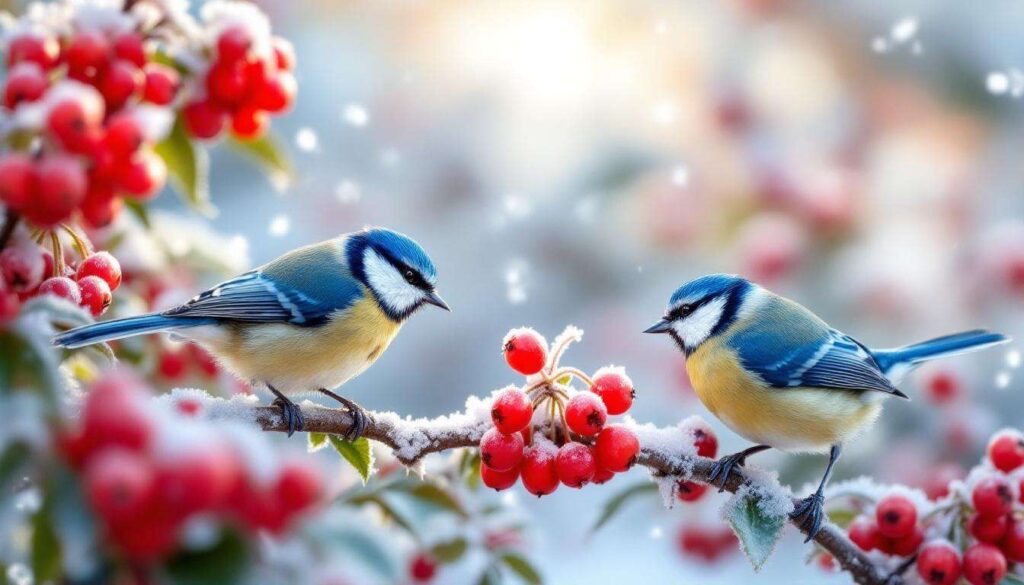
Blue tits rank amongst the most frequent garden visitors throughout Britain, with their acrobatic feeding behaviour and distinctive yellow-and-blue plumage making them instantly recognisable. These small birds typically prefer insects during warmer months but readily adapt their diet to include berries when other food becomes unavailable. Their lightweight build allows them to access berries on thin branches that larger species cannot reach, giving them a competitive advantage at certain feeding sites.
Blackbirds and winter foraging behaviour
Blackbirds demonstrate different feeding strategies compared to blue tits, spending considerable time foraging on the ground beneath berry-bearing shrubs. Male blackbirds with their jet-black plumage and bright yellow beaks become particularly visible against winter landscapes as they defend productive feeding territories. These thrushes possess strong digestive systems capable of processing larger quantities of berries than many smaller species, making them important seed dispersers for berry-producing plants.
Other common berry-eating visitors
| Species | Berry preference | Feeding style |
|---|---|---|
| Robins | Small, soft berries | Selective picking |
| Thrushes | Larger berries | Ground foraging |
| Starlings | Abundant clusters | Flock feeding |
| Waxwings | Rowan and hawthorn | Strip feeding |
Understanding which species visit gardens helps determine the most effective planting strategies for attracting desired birds. The variety of feeding behaviours amongst different species means that diverse berry plantings can support larger bird populations than single-species gardens.
The miracle berry that attracts blue tits and blackbirds
Pyracantha: the wildlife magnet
Ornithologists and gardening experts consistently identify pyracantha as the single most effective berry-producing plant for attracting both blue tits and blackbirds to gardens. This evergreen shrub, commonly known as firethorn, produces abundant clusters of bright orange, red, or yellow berries that persist throughout winter. The berries ripen in autumn and remain on the plant for months, providing a reliable food source precisely when birds need it most. Pyracantha berries contain optimal levels of fat and sugar that appeal to a wide range of species whilst the dense, thorny branches offer additional shelter and nesting sites.
Why pyracantha works so effectively
Several factors combine to make pyracantha particularly attractive to garden birds. The berries remain firm and palatable throughout winter, unlike some fruits that deteriorate rapidly or become unappetising after the first frost. The plant’s dense growth habit creates protected feeding areas where smaller birds can eat without constant vigilance for predators. Garden surveys have documented bird activity around pyracantha shrubs increasing within 48 to 72 hours of berry ripening, with some properties reporting visits from species not previously observed in their gardens.
- Produces hundreds of berries per square metre of growth
- Berries ripen progressively, extending the feeding season
- Thorny branches deter cats and other predators
- Evergreen foliage provides year-round cover
- Tolerates various soil types and urban pollution
The combination of these characteristics explains why wildlife organisations frequently recommend pyracantha as a priority planting for anyone wishing to support garden birds. Establishing which specific berry proves most effective naturally leads to questions about how experts evaluate different options.
How experts identify the best berries for birds
Scientific observation methods
Ornithologists employ rigorous methodologies to determine which berries provide the greatest benefit to bird populations. Long-term studies involve monitoring feeding behaviour, measuring berry consumption rates, and tracking bird health indicators across multiple seasons. Researchers use camera traps, time-lapse photography, and direct observation to document which species visit particular plants, how long they feed, and whether they return repeatedly. Chemical analysis of berry composition helps explain why certain fruits prove more popular than others, with factors such as sugar content, fat levels, and digestibility all playing important roles.
Practical testing in garden environments
Garden-based trials complement laboratory research by providing real-world data about bird preferences under natural conditions. Citizen science projects have contributed valuable information through thousands of volunteers recording bird visits to different berry-producing plants. These large-scale surveys reveal regional variations in bird preferences and help identify which plants perform best in specific climatic conditions or soil types.
| Research method | Data collected | Timeframe |
|---|---|---|
| Camera monitoring | Species identification, visit frequency | Continuous |
| Berry counts | Consumption rates | Weekly |
| Bird banding | Individual behaviour, survival rates | Multi-year |
This evidence-based approach ensures recommendations rest on solid scientific foundations rather than anecdotal observations. Armed with expert knowledge about the most effective berries, gardeners can then focus on successful cultivation techniques.
Tips for growing these berries in your garden
Planting and positioning strategies
Successful berry cultivation begins with proper site selection and planting technique. Pyracantha thrives in most soil types but performs best in well-drained locations with full sun to partial shade. Plant specimens at least 1.5 metres apart to allow adequate air circulation and future growth. Autumn planting gives roots time to establish before winter, though container-grown plants can be installed at any time provided the soil is workable. Dig planting holes twice the width of the root ball and incorporate organic matter to improve soil structure and moisture retention.
Maintenance and pruning requirements
Pyracantha requires minimal maintenance once established, making it ideal for busy gardeners. Light pruning after flowering helps maintain shape whilst avoiding removal of berry-bearing wood. Water newly planted specimens regularly during their first growing season, but mature plants tolerate drought well. Mulching around the base conserves moisture and suppresses weeds without requiring chemical treatments that might harm visiting birds.
- Apply general-purpose fertiliser in early spring
- Prune only after berries have been consumed
- Train against walls or fences for space efficiency
- Monitor for fireblight and treat promptly if detected
- Avoid pesticide use during berry production
Companion planting for extended seasons
Combining pyracantha with other berry-producing plants creates year-round food sources that support birds through all seasons. Holly provides berries later in winter, whilst cotoneaster offers earlier fruiting. This succession planting approach ensures gardens remain attractive to birds throughout the coldest months, with the benefits extending far beyond individual properties.
The impact of berries on the local ecosystem
Seed dispersal and plant regeneration
The relationship between berry-eating birds and plant reproduction represents one of nature’s most elegant partnerships. Birds consuming berries transport seeds considerable distances from parent plants, depositing them in new locations complete with a natural fertiliser package. This dispersal mechanism enables plant species to colonise new areas and maintain genetic diversity across populations. Gardens featuring abundant berry supplies effectively become seed distribution centres that contribute to wider landscape biodiversity.
Supporting wider wildlife networks
Increased bird populations resulting from berry availability create cascading effects throughout local ecosystems. Healthy bird communities help control insect populations, pollinate flowers, and provide food for predatory species higher up the food chain. Gardens that attract numerous birds often see corresponding increases in other wildlife, from hedgehogs feeding on dropped berries to butterflies visiting the same plants for nectar earlier in the year.
- Enhanced pollination services for neighbouring gardens
- Natural pest control through increased insectivorous bird activity
- Improved genetic diversity in local plant populations
- Educational opportunities for observing wildlife behaviour
These interconnected benefits demonstrate how simple gardening decisions can generate positive environmental impacts extending well beyond property boundaries, contributing to resilient ecosystems capable of supporting diverse species.
Creating bird-friendly gardens through strategic berry planting offers rewards for both wildlife and gardeners. Pyracantha stands out as the most effective choice for attracting blue tits and blackbirds, delivering rapid results whilst requiring minimal maintenance. The nutritional value these berries provide during winter months can prove critical for bird survival, whilst the broader ecosystem benefits support biodiversity at multiple levels. By understanding bird feeding preferences and following expert cultivation advice, anyone with outdoor space can transform their garden into a thriving wildlife habitat that provides year-round interest and contributes meaningfully to conservation efforts.