


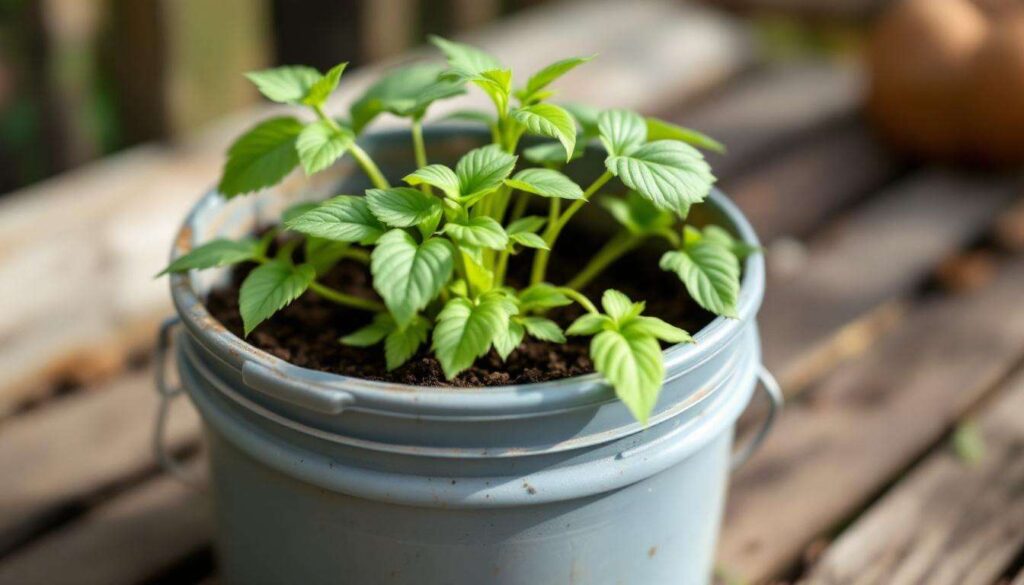
Growing potatoes in containers has revolutionised urban gardening and small-space cultivation. This method transforms the humble bucket into a productive vessel capable of yielding impressive harvests without requiring traditional garden beds. Whether you live in a flat with a balcony or simply want to maximise limited outdoor space, container potato growing offers a practical solution that combines simplicity with remarkable results.
Introduction to container potatoes
What is container potato cultivation ?
Container potato cultivation is a space-efficient growing technique that allows gardeners to produce substantial crops in confined areas. Rather than planting tubers directly into the ground, this method uses buckets, bins, or purpose-built containers to create an ideal growing environment. The technique has gained popularity amongst urban dwellers and allotment gardeners seeking maximum productivity from minimal space.
The process involves layering soil and compost within the container whilst gradually adding material as the potato plants grow upwards. This encourages the development of multiple layers of tubers along the buried stems, resulting in a vertical harvest that can significantly outperform traditional row planting in terms of yield per square metre.
Why buckets work so well for potatoes
Buckets provide several advantages that make them particularly suited to potato cultivation:
- Excellent drainage control preventing waterlogged roots
- Portability allowing movement to optimal sunlight positions
- Contained environment reducing pest and disease exposure
- Easy harvesting without digging or damaging tubers
The confined space also enables precise control over soil quality and composition, ensuring potatoes receive exactly the nutrients they require. This controlled environment proves especially valuable for gardeners dealing with poor native soil or contaminated ground unsuitable for edible crops.
Understanding these fundamentals sets the foundation for appreciating why bucket cultivation has become such a popular choice amongst modern gardeners.
The advantages of bucket cultivation
Space efficiency and flexibility
Bucket cultivation maximises vertical growing space whilst occupying minimal ground area. A standard bucket measuring approximately 30 centimetres in diameter can produce between 1 and 2 kilograms of potatoes, making it possible to grow substantial quantities on patios, balconies, or small courtyards. This vertical approach allows gardeners to stack productivity without expanding horizontally.
The portability of buckets offers unmatched flexibility. Containers can be repositioned throughout the growing season to follow sunlight patterns or moved under cover during extreme weather. This adaptability proves particularly valuable in unpredictable climates where sudden frosts or hailstorms might damage crops.
Improved disease management
Growing potatoes in fresh compost within buckets significantly reduces exposure to soil-borne diseases such as blight and scab. Each season begins with clean growing medium, breaking the disease cycle that often plagues traditional potato beds. The elevated position also improves air circulation around foliage, reducing humidity levels that encourage fungal infections.
Economic and environmental benefits
| Benefit | Description |
|---|---|
| Reduced water usage | Targeted watering minimises waste compared to ground beds |
| Lower input costs | Smaller quantities of compost and fertiliser required |
| Recycling opportunities | Repurposed buckets reduce waste and purchase costs |
These practical advantages demonstrate why bucket cultivation appeals to both novice and experienced gardeners, but success depends heavily on selecting appropriate containers.
How to choose the right container
Size and depth requirements
The ideal bucket for potato cultivation should hold a minimum of 10 litres, though containers of 15 to 20 litres produce superior results. Depth matters considerably: aim for at least 30 centimetres to accommodate adequate soil layers and tuber development. Shallow containers restrict root growth and limit the number of potatoes each plant can produce.
Width influences plant stability and moisture retention. Buckets with diameters between 25 and 35 centimetres provide sufficient space for robust root systems whilst remaining manageable to move when filled with soil.
Material considerations
Various materials offer different advantages:
- Plastic buckets: lightweight, affordable, retain moisture well but may degrade in direct sunlight over multiple seasons
- Metal containers: durable and aesthetically pleasing yet can heat up excessively, potentially damaging roots
- Fabric grow bags: excellent drainage and air pruning properties, though they dry out more rapidly
- Wooden containers: natural insulation and attractive appearance, but require treatment to prevent rot
Essential drainage features
Regardless of material, adequate drainage remains non-negotiable. Containers must feature multiple holes in the base, each approximately 1 centimetre in diameter, spaced evenly across the bottom surface. Without proper drainage, excess water accumulates, causing tubers to rot and plants to develop root diseases.
For repurposed buckets lacking drainage holes, use a drill or heated metal rod to create openings. Position containers on feet or bricks to ensure water can escape freely rather than pooling beneath the base.
With the right container selected, attention turns to creating the perfect growing environment within it.
Preparing the bucket and soil
Creating optimal drainage layers
Begin by placing a 5-centimetre layer of broken crockery, gravel, or stones at the bucket’s base. This drainage layer prevents soil from blocking exit holes whilst ensuring excess water flows away efficiently. Some gardeners add a thin sheet of landscape fabric above this layer to separate it from the growing medium whilst maintaining water flow.
Soil composition for maximum yield
Potatoes thrive in loose, nutrient-rich growing medium. The ideal mixture combines:
- 50% quality multipurpose compost
- 30% well-rotted garden compost or manure
- 20% perlite or vermiculite for improved drainage
This combination provides excellent drainage whilst retaining sufficient moisture and delivers the nutrients potatoes require throughout their growth cycle. Avoid using garden soil alone, as it compacts within containers, restricting root development and reducing yields.
Adjusting pH and adding amendments
Potatoes prefer slightly acidic conditions with a pH between 5.0 and 6.0. Test your growing medium and adjust if necessary using sulphur to lower pH or lime to raise it. Incorporate a slow-release organic fertiliser at planting time, following manufacturer recommendations for container cultivation.
Some gardeners add wood ash in small quantities to provide potassium, which promotes tuber development, though excessive amounts can raise pH beyond optimal levels.
With containers properly prepared, the actual planting process becomes straightforward and rewarding.
The steps to plant potatoes
Selecting and preparing seed potatoes
Choose certified seed potatoes rather than supermarket varieties, as these are guaranteed disease-free and selected for vigour. Chitting—pre-sprouting seed potatoes—gives plants a head start. Place seed potatoes in egg boxes with the end containing most eyes facing upward, then position in a cool, light location for 4 to 6 weeks until sturdy shoots develop.
The planting process
Fill the prepared bucket with approximately 10 centimetres of growing medium. Place two or three chitted seed potatoes on this surface, spacing them evenly with shoots pointing upward. Cover with another 10 centimetres of compost, ensuring shoots remain just beneath the surface.
Water gently but thoroughly, moistening the entire growing medium without creating waterlogged conditions. Position the container in a location receiving at least six hours of sunlight daily.
The earthing-up technique
As shoots emerge and reach approximately 15 centimetres in height, add more compost around the stems, leaving just the top few centimetres of foliage exposed. This process, called earthing up, encourages additional tuber formation along the buried stem portions.
Repeat this earthing-up process every two weeks until compost reaches within 5 centimetres of the bucket rim. Each layer creates opportunities for new potatoes to develop, significantly increasing overall yield.
Proper planting establishes the foundation for success, but ongoing care determines the ultimate harvest quality and quantity.
Care and harvest: tips for good yield
Watering requirements
Container potatoes require consistent moisture without waterlogging. During active growth, check soil moisture daily by inserting a finger 5 centimetres deep; if it feels dry, water thoroughly until excess drains from the base. In hot weather, containers may require watering twice daily, whilst cooler periods need less frequent irrigation.
Irregular watering causes tubers to crack or develop hollow centres, so maintaining even moisture levels proves crucial for quality.
Feeding and maintenance
Apply liquid fertiliser every fortnight once flowering begins, as this signals tuber development. Choose feeds high in potassium rather than nitrogen, which encourages foliage at the expense of tuber formation. Organic options such as comfrey tea or seaweed extract provide balanced nutrition whilst improving soil biology.
Monitor plants regularly for signs of pests or disease:
- Remove any yellowing lower leaves promptly
- Check for aphids on new growth
- Watch for blight symptoms during humid weather
- Hand-pick any Colorado beetles if present
Determining harvest readiness
Early varieties mature approximately 10 weeks after planting, whilst maincrop types require 15 to 20 weeks. Flowering indicates tuber formation has begun. For new potatoes, harvest when flowers first open. For storage potatoes, wait until foliage yellows and dies back naturally.
The harvesting process
Harvesting container potatoes is remarkably simple. Tip the bucket onto a tarp or sheet, then sift through the compost to collect tubers. This method ensures minimal damage compared to digging traditional beds. Allow potatoes to dry for several hours before storage, brushing off excess soil without washing.
Store undamaged tubers in paper sacks or hessian bags in a cool, dark location. Properly cured potatoes remain viable for several months, providing fresh produce well beyond the growing season.
Container potato cultivation demonstrates that productive gardening requires neither extensive space nor complex techniques. A simple bucket, quality compost, and regular attention can deliver impressive harvests that rival traditional methods. This approach offers accessibility to those previously excluded from vegetable growing whilst providing experienced gardeners with efficient supplementary production. The combination of space efficiency, disease management, and straightforward harvesting makes bucket cultivation an invaluable technique for modern gardeners seeking fresh, home-grown produce regardless of their available growing area.