


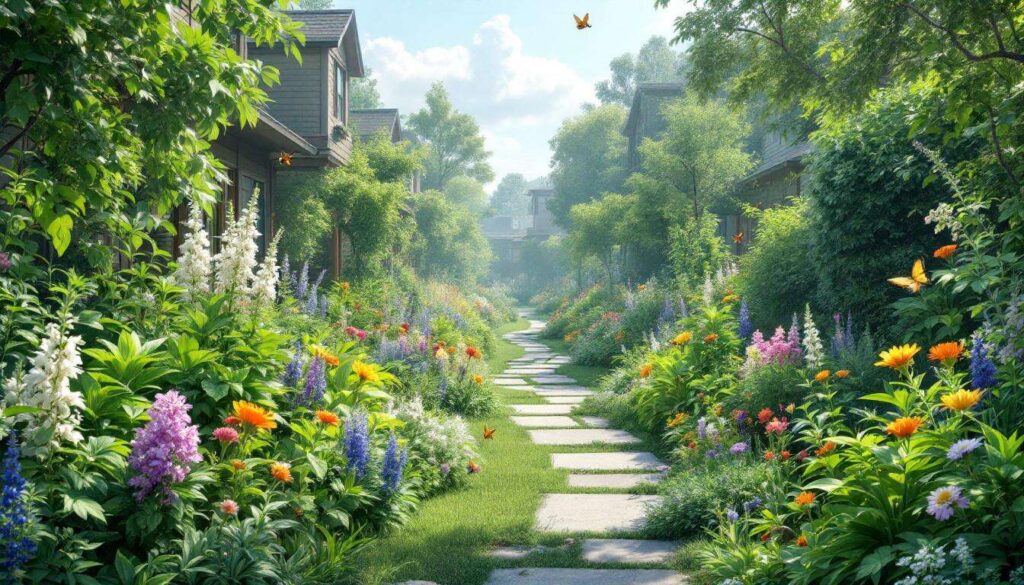
Urban spaces are increasingly disconnected from natural ecosystems, leaving wildlife with fewer pathways to move, feed, and thrive. Corridor gardens offer a practical solution by transforming ordinary backyards into vital ecological links that support local fauna and flora. This innovative approach to gardening not only enhances biodiversity but also reconnects homeowners with the rhythms of the natural world. By designing gardens that function as green corridors, individuals can contribute to a larger network of habitats that sustain wildlife populations across fragmented landscapes.
Introduction to corridor gardens: a link to nature
What defines a corridor garden
A corridor garden is a deliberately designed outdoor space that serves as a connecting pathway between fragmented habitats, allowing wildlife to move safely through urban and suburban environments. Unlike traditional gardens focused solely on aesthetics, corridor gardens prioritise ecological function alongside visual appeal. These spaces incorporate native plants, varied vegetation layers, and features that provide food, shelter, and breeding grounds for insects, birds, mammals, and other creatures. The concept draws inspiration from landscape ecology, which recognises that isolated habitat patches cannot sustain healthy wildlife populations over time. By creating continuous or stepping-stone corridors, gardeners help animals navigate through developed areas whilst reducing the risks associated with habitat fragmentation.
The philosophy behind ecological connectivity
The underlying principle of corridor gardens rests on the understanding that nature functions as an interconnected web rather than isolated pockets. Wildlife requires access to diverse resources across different locations throughout their life cycles. Corridor gardens address this need by:
- Providing safe passage routes between larger natural areas
- Offering resources that may be scarce in surrounding environments
- Reducing the genetic isolation of small populations
- Creating resilience against environmental changes and disturbances
This philosophy extends beyond individual properties, encouraging neighbours to coordinate their gardening efforts to establish continuous green networks throughout residential areas. Such collective action multiplies the ecological benefits exponentially compared to isolated efforts.
Understanding these foundational concepts naturally leads to exploring why corridor gardens have become essential for supporting wildlife populations in increasingly developed landscapes.
The importance of corridor gardens for biodiversity
Combating habitat fragmentation
Habitat fragmentation represents one of the most significant threats to biodiversity worldwide. As development expands, natural areas become divided into smaller, isolated patches that cannot sustain viable populations of many species. Corridor gardens directly address this challenge by reconnecting these fragments, enabling animals to access larger effective habitat areas. Research demonstrates that even narrow corridors significantly increase species survival rates and genetic diversity. For instance, hedgehogs require access to multiple gardens to find sufficient food and mates, whilst pollinators need continuous floral resources throughout their active seasons. Without these connections, populations decline rapidly, leading to local extinctions that cascade through entire ecosystems.
Supporting pollinator populations
Pollinators face particular challenges in fragmented landscapes, as they require consistent nectar and pollen sources from early spring through late autumn. Corridor gardens filled with native flowering plants provide these essential resources whilst creating safe travel routes between foraging sites. The benefits extend beyond the garden itself:
| Pollinator type | Corridor benefit | Impact on ecosystem |
|---|---|---|
| Bees | Continuous floral resources | Enhanced crop pollination |
| Butterflies | Host plants and nectar sources | Increased biodiversity indicators |
| Hoverflies | Diverse flower structures | Natural pest control |
Creating refuge for small mammals and birds
Small mammals such as hedgehogs, voles, and shrews depend on interconnected habitat networks to survive in developed areas. Corridor gardens provide essential cover from predators whilst offering food sources and nesting sites. Similarly, garden birds benefit from continuous vegetation that supplies insects for feeding young, berries for winter sustenance, and safe perching spots. The structural diversity within corridor gardens—including ground cover, shrubs, and trees—accommodates species with different ecological requirements, thereby maximising the wildlife value of limited space.
Recognising these ecological benefits inspires many homeowners to transform their own outdoor spaces into functional wildlife corridors.
How to create a corridor garden at home
Assessing your space and existing features
Creating a corridor garden begins with a thorough assessment of your available space and its relationship to surrounding areas. Walk your property boundaries to identify potential entry and exit points for wildlife, noting existing features such as hedges, fences, and vegetation. Consider how your garden connects to neighbours’ properties, nearby parks, or natural areas. Even small gaps under fences or gaps in walls can serve as vital passageways for creatures like hedgehogs and amphibians. Document sun exposure patterns, soil conditions, and moisture levels, as these factors will influence plant selection. This initial evaluation helps you design a corridor that maximises ecological function within your specific context.
Designing for connectivity and layers
Effective corridor garden design incorporates multiple vegetation layers that mimic natural ecosystems. This approach provides resources for diverse species with varying habitat preferences:
- Ground layer: low-growing wildflowers, mosses, and leaf litter
- Herbaceous layer: perennial flowers and grasses reaching 30-100cm
- Shrub layer: woody plants between 1-5 metres providing structure
- Canopy layer: trees offering height, nesting sites, and food
Arrange these layers to create continuous cover along the corridor route, avoiding large open spaces that make wildlife vulnerable to predators. Include features such as log piles, stone walls, and water sources to enhance habitat value. Ensure pathways allow animals to move through your garden without encountering barriers or hazards.
Practical installation steps
Once your design is finalised, implementation follows a logical sequence. Begin by creating physical connections through boundaries—installing hedgehog highways (13cm x 13cm gaps) in fences or leaving sections of wall with small openings. Remove invasive species that outcompete native plants and offer little wildlife value. Prepare planting areas by improving soil quality with organic matter, then install plants according to your layered design, starting with larger specimens and filling gaps with smaller plants. Establish water features such as shallow ponds or birdbaths, ensuring they include escape routes for small creatures. Finally, add supplementary habitat features like insect hotels, bird boxes, and hibernation sites. Allow the garden to develop naturally, resisting the urge to over-tidy, as messy corners often provide the most valuable wildlife habitat.
With the structural framework established, attention turns to selecting appropriate plant species that will sustain the corridor’s ecological functions.
The ideal plants for a corridor garden
Prioritising native species
Native plants form the foundation of successful corridor gardens because they have co-evolved with local wildlife over millennia. These species support significantly more insects than non-native alternatives, which in turn sustains birds, mammals, and other creatures higher up the food chain. Native plants are also adapted to local climate conditions, requiring less maintenance and fewer resources once established. Examples of valuable British natives include hawthorn, blackthorn, dog rose, primrose, and foxglove. When selecting natives, choose species that naturally occur in your region rather than natives from other parts of the country, as local ecotypes perform best and support indigenous wildlife populations most effectively.
Year-round resource provision
A well-designed corridor garden provides resources throughout all seasons, addressing the varying needs of wildlife across their annual cycles. This requires careful plant selection to ensure continuous flowering from early spring through late autumn, alongside plants that offer winter berries, seeds, and shelter:
| Season | Resource type | Example plants |
|---|---|---|
| Spring | Early nectar sources | Pussy willow, primrose, bluebells |
| Summer | Peak flowering diversity | Meadow cranesbill, knapweed, field scabious |
| Autumn | Late flowers and berries | Ivy, rowan, hazel |
| Winter | Seeds and structure | Teasel, honesty, evergreen shrubs |
Structural diversity for different species
Different wildlife species require plants with varied structural characteristics to meet their specific needs. Include plants of different heights, densities, and growth forms to accommodate this diversity. Dense hedging plants like hawthorn and holly provide nesting sites and protective cover, whilst open-structured perennials allow ground-dwelling creatures to move freely beneath. Climbing plants such as honeysuckle and clematis add vertical dimension, creating additional habitat layers. Grasses offer cover for small mammals and overwintering sites for invertebrates. By incorporating this structural variety, corridor gardens can support a broader range of species than monoculture plantings, regardless of their aesthetic appeal.
Beyond supporting biodiversity, corridor gardens deliver numerous environmental benefits that extend their value to both wildlife and human communities.
The ecological advantages of corridor gardens
Climate resilience and carbon sequestration
Corridor gardens contribute to climate change mitigation through multiple mechanisms. Vegetation absorbs carbon dioxide during photosynthesis, storing carbon in plant tissues and soil organic matter. Trees and shrubs provide particularly significant sequestration potential over their lifespans. Additionally, the diverse plant communities typical of corridor gardens demonstrate greater resilience to climate extremes compared to conventional landscapes. Mixed plantings withstand droughts, floods, and temperature fluctuations more effectively than monocultures, maintaining their ecological functions despite environmental stresses. The soil in established corridor gardens also retains moisture more efficiently, reducing water runoff and helping moderate local temperatures through evapotranspiration.
Natural pest control and ecosystem services
By supporting diverse wildlife populations, corridor gardens enhance natural pest control mechanisms that reduce the need for chemical interventions. Predatory insects, birds, hedgehogs, and other creatures consume vast quantities of garden pests, maintaining balanced populations without harmful pesticides. The ecosystem services provided by corridor gardens include:
- Pollination of food crops and ornamental plants
- Soil improvement through decomposition and nutrient cycling
- Water filtration and flood mitigation through vegetation and soil
- Air quality improvement via dust capture and oxygen production
- Noise reduction through vegetation barriers
Mental health and community benefits
Beyond ecological advantages, corridor gardens offer significant human benefits that enhance quality of life. Regular contact with nature reduces stress, anxiety, and depression whilst improving cognitive function and overall wellbeing. Gardening itself provides physical exercise and a sense of purpose. When neighbours collaborate on creating connected corridors, these projects strengthen community bonds and foster shared environmental stewardship. Children growing up with access to wildlife-rich gardens develop stronger connections to nature, potentially influencing their environmental attitudes throughout life. These social and psychological benefits complement the ecological advantages, making corridor gardens valuable investments in both environmental and community health.
Real-world examples demonstrate how these principles translate into successful corridor garden projects that inspire others to participate in this growing movement.
Testimonials and inspirations: success stories around corridor gardens
Urban transformation projects
Numerous communities have successfully implemented corridor garden networks that dramatically increased local biodiversity. In Brighton, a neighbourhood initiative connected over forty gardens through coordinated planting and boundary modifications, resulting in a documented increase in hedgehog sightings and bird species diversity within two years. Residents reported greater satisfaction with their outdoor spaces and strengthened relationships with neighbours. Similar projects in Bristol and Edinburgh have demonstrated that even densely populated urban areas can support thriving wildlife populations when residents commit to creating connected habitats. These successes prove that collective action amplifies individual efforts, creating ecological benefits that exceed the sum of isolated gardens.
Individual garden transformations
Personal testimonials reveal the profound impact that corridor garden principles can have on individual properties. One homeowner in Surrey transformed a conventional lawn-dominated garden into a layered wildlife corridor, documenting the arrival of species previously absent from the area, including slow worms, numerous butterfly species, and visiting deer. Another gardener in Wales created a corridor specifically designed for pollinators, recording over thirty bee species within a single season. These individual success stories demonstrate that significant ecological improvements are achievable regardless of garden size or starting conditions. The key factors consistently cited include patience, willingness to embrace natural aesthetics, and commitment to native plant selection.
Corridor gardens represent a practical and rewarding approach to environmental stewardship that anyone with outdoor space can implement. By transforming backyards into functional wildlife corridors, gardeners create essential links between fragmented habitats whilst enjoying the beauty and vitality of thriving ecosystems. The ecological benefits extend far beyond individual properties, contributing to broader landscape connectivity that sustains biodiversity in increasingly developed environments. As more people embrace this approach, the cumulative impact grows, creating resilient networks that support both wildlife and human communities. Whether starting with small modifications or undertaking complete garden redesigns, every effort to enhance ecological connectivity makes a meaningful difference in preserving the natural world for future generations.