

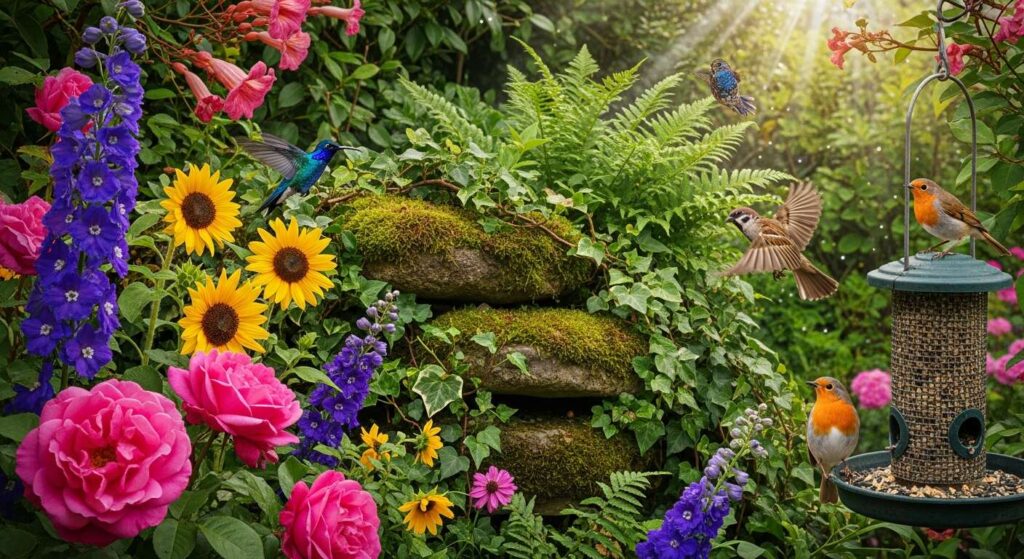
Gardens across the country are falling silent as bird populations decline, leaving many outdoor spaces feeling lifeless and empty. The absence of chirping, fluttering wings and vibrant plumage signals a troubling shift in our local ecosystems. Fortunately, reversing this trend doesn’t require expensive equipment or professional landscaping. A few simple, budget-friendly adjustments can transform your garden into a thriving sanctuary that welcomes feathered visitors throughout the year.
Why are birds leaving your garden ?
Loss of natural food sources
Modern gardening practices have inadvertently created food deserts for birds. Manicured lawns, non-native ornamental plants and the widespread use of pesticides have eliminated the insects, seeds and berries that birds depend upon for survival. When gardens lack diverse vegetation, they fail to support the complex food chains that sustain bird populations.
Absence of water and shelter
Birds require more than just food to thrive. They need reliable water sources for drinking and bathing, as well as safe spaces to rest and nest. Gardens dominated by hard landscaping, decking and paving offer little refuge from predators or harsh weather conditions. Without adequate shelter, birds simply move on to more hospitable environments.
Increased urban pressures
The expansion of urban areas has fragmented natural habitats, forcing birds to compete for increasingly scarce resources. Common threats include:
- Domestic cats hunting in gardens
- Window collisions causing injury and death
- Light pollution disrupting natural behaviours
- Noise pollution interfering with communication
Understanding these challenges provides the foundation for implementing effective solutions that address birds’ fundamental needs.
Tips for attracting birds without breaking the bank
Create feeding stations on a budget
You don’t need expensive equipment to start feeding birds. Homemade feeders crafted from recycled materials work remarkably well. Empty plastic bottles, old teacups or wooden pallets can be transformed into functional feeding stations with minimal effort. Position multiple feeders at different heights to accommodate various species’ preferences.
Provide fresh water economically
A simple shallow dish or upturned bin lid filled with clean water serves perfectly as a bird bath. Place a few stones inside to provide perching spots and prevent smaller birds from drowning. During winter, regularly break ice to maintain access to water when natural sources freeze.
Plant native species strategically
Native plants offer exceptional value for money whilst providing year-round benefits. Consider these cost-effective options:
- Hawthorn and rowan trees for berries
- Teasel and sunflowers for seeds
- Ivy and honeysuckle for insects and shelter
- Wildflower mixes for nectar and seeds
Many native plants self-seed, reducing future costs whilst creating increasingly diverse habitats.
Maintain natural garden areas
Embracing a slightly wilder aesthetic costs nothing and delivers significant benefits. Allow grass to grow longer in designated areas, leave fallen leaves in borders and resist the urge to deadhead every flower. These low-maintenance zones support insects that birds feed upon whilst providing nesting materials.
Once you’ve established these foundational elements, selecting appropriate food becomes the next crucial step.
What types of food attract birds ?
Seed varieties for different species
Different birds have distinct dietary preferences. Understanding these helps maximise visits:
| Food Type | Attracted Species | Best Season |
|---|---|---|
| Black sunflower seeds | Finches, tits, nuthatches | Year-round |
| Nyjer seeds | Goldfinches, siskins | Autumn-spring |
| Peanuts (unsalted) | Tits, woodpeckers, jays | Winter |
| Mixed seed blends | Sparrows, dunnocks, robins | Year-round |
Kitchen scraps and natural foods
Household leftovers can supplement commercial bird food effectively. Suitable options include:
- Grated cheese (mild varieties only)
- Cooked rice and pasta
- Porridge oats
- Raisins and sultanas (soaked)
- Apple and pear pieces
Avoid bread, salt, chocolate and anything mouldy, as these can harm birds.
Seasonal feeding considerations
Adjust your offerings throughout the year to match birds’ changing nutritional requirements. During breeding season (spring-summer), protein-rich foods like mealworms support parent birds feeding chicks. In winter, high-fat options such as suet and fat balls provide essential energy for surviving cold nights.
Knowing what to offer is only half the equation; placement determines whether birds will actually visit.
Where to place food to maximise bird visits
Height and visibility factors
Position feeders at varying heights to cater to different feeding behaviours. Ground-feeding species like blackbirds and thrushes prefer scattered food on open lawn areas, whilst tits and finches favour hanging feeders suspended 1.5-2 metres high. Ensure feeders are visible from nearby cover so birds can quickly retreat if threatened.
Safety from predators
Strategic placement protects birds whilst they feed. Install feeders at least two metres from dense shrubs where cats might hide, yet close enough to trees or hedges (3-4 metres) to provide escape routes. Avoid positioning feeders near reflective windows to prevent collisions.
Shelter and weather protection
Birds appreciate feeding areas that offer some protection from wind and rain. Position feeders on the sheltered side of buildings or beneath overhanging branches. This consideration proves particularly important during harsh weather when birds expend maximum energy maintaining body temperature.
Multiple feeding zones
Creating several feeding stations reduces competition and accommodates more species. Distribute feeders across your garden rather than clustering them together. This approach also minimises disease transmission by preventing overcrowding at single locations.
Even with perfect placement, certain common mistakes can undermine your efforts entirely.
Errors to avoid that could deter birds
Poor hygiene practices
Dirty feeders spread disease rapidly amongst bird populations. Clean all feeding equipment weekly using hot water and mild disinfectant, rinsing thoroughly afterwards. Remove uneaten food regularly and clear accumulated droppings from feeding areas to prevent bacterial growth.
Inconsistent feeding schedules
Birds learn to rely on regular food sources, particularly during winter when natural supplies dwindle. Suddenly stopping feeding can leave birds vulnerable, especially if they’ve abandoned other territories to visit your garden. Maintain consistent provisioning once you begin, or gradually reduce quantities rather than stopping abruptly.
Using inappropriate foods
Well-meaning gardeners sometimes offer harmful items. Never provide:
- Salted or dry roasted nuts
- Desiccated coconut (swells in stomachs)
- Milk or dairy products
- Cooking fat or grease
- Mouldy or spoiled food
Neglecting water sources
Dirty or stagnant water poses health risks. Change water daily during warm weather and scrub bird baths regularly to remove algae and bacteria. During freezing conditions, use warm (not boiling) water to melt ice rather than adding chemicals.
Beyond the immediate pleasure of watching birds, encouraging their presence delivers substantial environmental advantages.
Ecological benefits of bringing birds back to your garden
Natural pest control
Birds provide free pest management services by consuming vast quantities of insects. A single blue tit family can eat thousands of caterpillars whilst raising chicks, protecting your plants from damage without chemical interventions. Thrushes tackle slugs and snails, whilst starlings probe lawns for leatherjackets and other soil-dwelling pests.
Pollination and seed dispersal
Many bird species contribute to plant reproduction by transferring pollen between flowers and dispersing seeds across wider areas. This activity promotes genetic diversity and helps native plants colonise new spaces, strengthening overall ecosystem resilience.
Biodiversity enhancement
Attracting birds creates cascading benefits throughout your garden’s food web. The insects that birds feed upon require diverse plant life, which in turn supports fungi, soil organisms and small mammals. This interconnected system produces a healthier, more balanced environment that requires less human intervention.
Educational and wellbeing value
Bird-friendly gardens offer opportunities for nature connection and learning. Observing bird behaviour provides insights into seasonal patterns, species identification and ecological relationships. Studies consistently demonstrate that regular contact with nature, including birdwatching, reduces stress and improves mental health outcomes.
Transforming your garden into a bird haven requires minimal financial investment but delivers maximum rewards. By understanding why birds avoid certain spaces and implementing simple solutions, you create vibrant outdoor environments that benefit wildlife and enhance your quality of life. Fresh water, appropriate food and safe shelter form the cornerstones of success, whilst avoiding common pitfalls ensures birds return season after season. The ecological advantages extend far beyond aesthetic pleasure, contributing to healthier ecosystems that support diverse life forms. Start small, remain consistent and watch as your garden gradually fills with the sights and sounds of thriving bird populations.