



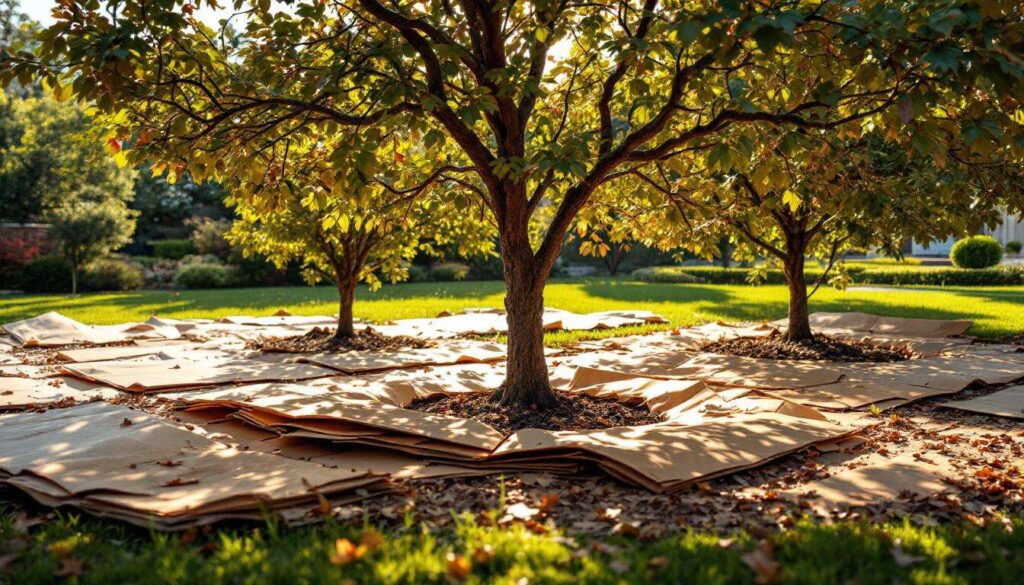
Gardens across Britain face an age-old challenge: keeping weeds at bay whilst nurturing young trees. Amongst various strategies, one stands out for its simplicity and ecological benefits. Placing cardboard around tree bases creates an effective barrier that blocks sunlight, preventing weed seeds from germinating. This time-tested approach combines practicality with environmental responsibility, offering gardeners a chemical-free solution that simultaneously improves soil health and conserves moisture.
What is cardboard mulching and why is it effective
The fundamental principle behind cardboard barriers
Cardboard mulching operates on a straightforward yet powerful concept: light deprivation. Weed seeds require sunlight to trigger germination, and by placing opaque cardboard layers over the soil, this essential energy source is blocked. The technique creates an impenetrable shield that prevents photosynthesis, effectively starving potential weeds before they can establish themselves. Standard corrugated cardboard proves particularly effective due to its dual-layer construction, which ensures complete opacity whilst maintaining sufficient structural integrity to withstand weather conditions.
Additional benefits beyond weed suppression
Beyond blocking light, cardboard barriers generate several complementary advantages:
- Enhanced moisture retention beneath the cardboard layer
- Regulated soil temperature, protecting roots from extreme fluctuations
- Gradual decomposition that enriches soil with organic matter
- Creation of favourable conditions for beneficial soil organisms
- Reduction of water competition between weeds and trees
The method proves especially valuable for young trees, which require maximum access to nutrients and water during their establishment phase. By eliminating weed competition, cardboard mulching ensures these vital resources remain available to the developing tree root system.
Understanding how cardboard physically prevents weed growth requires examining the mechanisms at work beneath this humble material.
How cardboard blocks light and prevents weeds
The science of light exclusion
Photosynthesis depends entirely on light availability. When cardboard covers soil, it creates complete darkness that makes germination impossible for most weed species. Even persistent varieties struggle to penetrate through properly layered cardboard. The corrugated structure provides thickness ranging from 3 to 5 millimetres, sufficient to block virtually all light wavelengths essential for plant growth. This barrier remains effective throughout the cardboard’s lifespan, typically lasting between nine and eighteen months depending on environmental conditions.
Creating an inhospitable environment for weed development
The cardboard layer transforms the soil microclimate in ways that discourage weed establishment. Beneath the barrier, conditions become cooler and more consistently humid, which paradoxically benefits tree roots whilst hindering many common weed species adapted to surface-level growing conditions. The following table illustrates key environmental changes:
| Environmental Factor | Without Cardboard | With Cardboard Barrier |
|---|---|---|
| Surface temperature variation | High fluctuation | Stable, moderated |
| Moisture evaporation | Rapid loss | Significantly reduced |
| Light penetration | 100% | Near 0% |
| Weed germination rate | High | Minimal to none |
Dealing with persistent rhizome weeds
Certain aggressive species, particularly those spreading through underground rhizomes such as couch grass or bindweed, present greater challenges. For these persistent invaders, a single cardboard layer may prove insufficient. Gardeners combat these species by applying multiple overlapping layers, creating a barrier thick enough to exhaust the energy reserves stored in rhizomes. Without access to light, these underground structures eventually deplete their resources and perish.
Achieving optimal results requires selecting appropriate materials and preparing them correctly before application.
Choosing and preparing the necessary materials for mulching
Selecting suitable cardboard types
Not all cardboard proves equally effective for mulching purposes. Plain corrugated cardboard represents the ideal choice, offering the right balance of durability and decomposition rate. Gardeners should actively avoid several unsuitable materials:
- Cardboard with glossy or waxed coatings that resist decomposition
- Boxes featuring plastic tape or excessive synthetic adhesives
- Heavily printed cardboard containing potentially harmful inks
- Thin single-layer card insufficient to block light effectively
Standard delivery boxes, appliance packaging, and similar household cardboard work excellently. Before use, remove all plastic components, including tape, labels, and staples, ensuring only biodegradable material contacts the soil.
Preparing cardboard for optimal performance
Proper preparation significantly enhances cardboard effectiveness. Begin by flattening boxes completely, creating manageable sheets that lie flush against the ground. Pre-moistening cardboard before application proves crucial: saturated cardboard conforms better to soil contours, establishes immediate contact with the earth, and begins decomposing more uniformly. Soaking pieces in water for fifteen to thirty minutes achieves ideal saturation.
Gathering complementary mulching materials
Cardboard alone provides the light-blocking foundation, but additional materials ensure long-term success. A top layer of organic mulch serves multiple purposes: it weighs down cardboard against wind displacement, maintains moisture levels, and provides aesthetic appeal. Wood chips represent the preferred choice for British gardens, applied to depths between seventy-five and one hundred millimetres. Alternative options include well-rotted compost, leaf mould, or bark chips, each offering distinct advantages depending on local availability and specific garden conditions.
With materials selected and prepared, implementing the cardboard barrier follows a systematic process that maximises effectiveness.
Steps to apply a cardboard barrier around trees
Preparing the application area
Begin by clearing vegetation from a circular area extending at least one metre from the trunk in all directions. For young trees, this radius should increase proportionally to the tree’s canopy spread, ensuring the protected zone encompasses the active root feeding area. Remove existing weeds manually, cutting perennial species close to ground level rather than disturbing roots through digging. Avoid creating soil disturbance that might damage shallow tree roots or bring dormant weed seeds to the surface where they could germinate before cardboard application.
Laying cardboard sheets effectively
Position pre-moistened cardboard pieces around the tree base, working methodically to create complete coverage. Overlap adjacent sheets by one hundred to one hundred fifty millimetres, eliminating any gaps where light might penetrate. This overlapping proves absolutely critical for preventing weed breakthrough at sheet junctions. Around the trunk itself, leave a small gap of approximately one hundred millimetres, preventing moisture accumulation against bark that could encourage fungal problems or pest harbourage.
The following sequence ensures thorough coverage:
- Start with larger sheets in the centre, working outward
- Use smaller pieces to fill awkward spaces and ensure complete coverage
- Press cardboard firmly against soil, eliminating air pockets
- Ensure all edges overlap generously with neighbouring pieces
- Extend coverage slightly beyond the intended mulched area
Applying the protective mulch layer
Once cardboard placement is complete, immediately apply the organic mulch topping. Distribute wood chips or chosen alternative evenly across the cardboard surface, maintaining consistent depth throughout. Avoid the common error of piling mulch against the trunk, a practice known as “volcanoing” that creates moisture problems and provides habitat for bark-damaging pests. Instead, maintain the one hundred millimetre gap around the trunk, keeping this area clear of both cardboard and mulch.
Water the completed installation thoroughly, helping cardboard settle and initiating the decomposition process that will eventually enrich the soil beneath.
Even properly installed cardboard barriers require attention to certain pitfalls that can undermine their effectiveness.
Tips to avoid common mistakes and maintain effectiveness
Preventing the volcanoing problem
Perhaps the most prevalent error involves excessive mulch accumulation against tree trunks. This practice, though well-intentioned, creates persistently damp conditions that encourage bark decay, provide habitat for destructive insects, and can girdle young trees as decomposing material settles. Maintain the recommended gap, checking periodically that mulch has not migrated inward through settling or weather disturbance.
Monitoring and refreshing the barrier
Cardboard barriers require periodic inspection and maintenance to sustain effectiveness. After storms or heavy rainfall, examine the installation for displacement or degradation. As cardboard decomposes, typically within nine to eighteen months, its light-blocking capacity diminishes. Before complete breakdown occurs, apply fresh cardboard layers over degrading material, maintaining continuous weed suppression. The decomposed original layer enriches soil whilst new cardboard continues the protective function.
Addressing breakthrough weeds promptly
Occasionally, persistent weeds may penetrate barriers through gaps or weakened areas. Address these immediately upon detection, removing them manually before they establish extensive root systems. Inspect junction points between cardboard sheets particularly carefully, as these represent the most vulnerable locations for weed breakthrough. Patch any identified gaps with additional cardboard pieces, ensuring overlaps remain adequate.
Expanding coverage as trees mature
Young trees develop extensive root systems that spread well beyond their canopy edges. As trees grow, expand the mulched area accordingly, typically adding to the radius annually. This expansion ensures the protective zone keeps pace with root development, maintaining weed suppression across the entire active feeding area where competition would most significantly impact tree health.
Evaluating this approach against alternatives helps gardeners make informed decisions suited to their specific circumstances.
Advantages and disadvantages of cardboard mulching for British gardens
Key benefits for UK gardening conditions
Britain’s climate presents particular challenges and opportunities for cardboard mulching. The method proves exceptionally well-suited to the UK’s temperate, often wet conditions. Advantages include:
- Complete elimination of herbicide requirements, supporting organic gardening principles
- Excellent moisture retention during dry summer periods
- Soil temperature moderation protecting roots during winter freezes
- Gradual soil enrichment as cardboard decomposes into humus
- Cost-effectiveness, utilising readily available waste materials
- Promotion of earthworm activity and beneficial soil microorganisms
- Reduction in watering requirements during establishment periods
The technique particularly benefits gardeners managing clay-heavy soils common throughout Britain, as decomposing cardboard and organic mulch gradually improve soil structure and drainage.
Limitations and considerations
Despite numerous advantages, cardboard mulching presents certain drawbacks requiring consideration. The aesthetic appearance may not suit formal garden designs, appearing utilitarian rather than ornamental. Initial material collection and application demands significant labour investment, particularly when treating multiple trees. In exceptionally wet conditions, cardboard may decompose faster than desired, requiring more frequent replacement. The method also proves less effective against established perennial weeds with extensive root systems already present before application.
Comparison with alternative approaches
Understanding cardboard mulching’s position amongst alternatives informs appropriate application:
| Method | Effectiveness | Soil Enrichment | Environmental Impact | Cost |
|---|---|---|---|---|
| Cardboard mulching | High | Excellent | Very positive | Very low |
| Synthetic fabric | Very high | None | Negative | Moderate |
| Plastic sheeting | Very high | None | Very negative | Low |
| Organic mulch alone | Moderate | Good | Positive | Moderate |
| Chemical herbicides | High | Negative | Negative | Moderate |
Synthetic alternatives block weeds effectively but prevent beneficial gas exchange between soil and atmosphere, inhibiting microbial activity essential for soil health. Unlike these materials, cardboard permits gradual air and moisture movement whilst decomposing into valuable organic matter.
Gardeners seeking sustainable, effective weed control around trees find cardboard mulching offers compelling advantages. This straightforward technique harnesses natural processes, blocking light to prevent weed germination whilst simultaneously enriching soil and conserving moisture. Though requiring periodic maintenance and material replacement, the method’s environmental benefits, cost-effectiveness, and proven results make it particularly suitable for British gardens. By embracing this approach, gardeners contribute to healthier soil ecosystems whilst establishing optimal conditions for tree development, demonstrating that effective solutions often lie in rediscovering traditional wisdom adapted to contemporary understanding.