



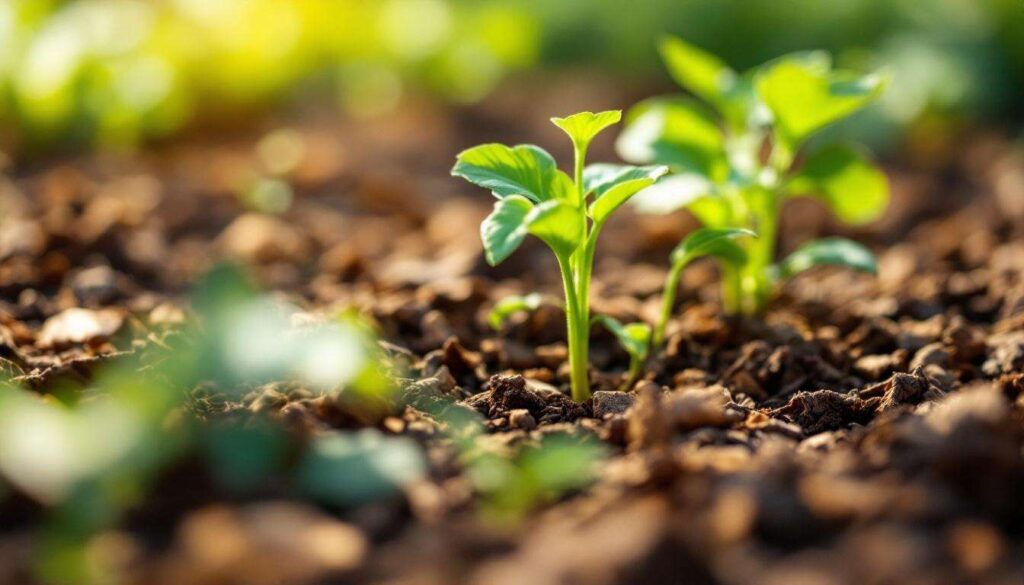
Gardens across the country face a persistent challenge: keeping plants adequately hydrated whilst managing increasingly unpredictable weather patterns. Water scarcity concerns and environmental awareness have prompted gardeners to seek smarter irrigation strategies. The mulch ring technique offers a deceptively simple solution that addresses moisture retention at its source. By creating a protective layered barrier around plant bases, this method intercepts the natural process of evaporation, redirecting precious water reserves directly to root systems where they deliver maximum benefit. Understanding how this technique functions reveals why it has become an essential tool for sustainable gardening practices.
The importance of the mulch ring for plant hydration
Moisture conservation through strategic coverage
The mulch ring serves as a critical defence mechanism against water loss in garden environments. Research demonstrates that properly mulched areas can retain 50 to 60 per cent more moisture compared to exposed soil surfaces. This dramatic difference translates directly into reduced watering frequency, allowing gardeners to cut irrigation needs by half whilst maintaining optimal plant health. The circular application pattern around individual plants creates a localised microclimate that prioritises water availability precisely where roots can access it most efficiently.
Root development and soil temperature regulation
Beyond simple moisture retention, mulch rings contribute to enhanced root architecture by maintaining stable soil temperatures. The insulating properties of layered mulch protect root zones from extreme temperature fluctuations that stress plant systems. During summer months, this barrier shields roots from heat shock, whilst winter applications prevent frost penetration. The resulting environment encourages deeper root penetration, establishing more resilient plants capable of accessing water reserves during dry periods. This thermal regulation proves particularly valuable for newly established specimens still developing their root networks.
Economic and environmental advantages
Implementing mulch rings delivers measurable benefits that extend beyond plant health:
- Reduced water consumption lowers utility costs and conserves municipal water supplies
- Decreased irrigation frequency saves time and labour investment
- Minimised evaporation reduces the carbon footprint associated with water treatment and delivery
- Enhanced soil structure improves long-term garden productivity
These practical advantages have driven adoption among environmentally conscious gardeners seeking sustainable practices that align with resource conservation goals. The technique’s effectiveness in drought-prone regions has established it as a fundamental component of water-wise landscaping strategies.
Understanding the physics of evaporation and the role of mulch
Capillary action disruption
Evaporation occurs when soil moisture travels upward through capillary channels within the soil matrix, eventually reaching the surface where it transforms into water vapour. Mulch layers interrupt this capillary pathway by creating a physical barrier that breaks the continuous column of soil particles. Without direct contact between surface particles and the atmosphere, the vapour pressure gradient that drives evaporation weakens considerably. This disruption redirects moisture downward towards root zones rather than allowing it to escape into the air.
Temperature and humidity modification
The microclimate beneath mulch layers exhibits distinctly different characteristics compared to exposed soil:
| Condition | Bare soil | Mulched soil |
|---|---|---|
| Surface temperature | Variable, extreme peaks | Moderated, stable |
| Relative humidity | Low, fluctuating | Higher, consistent |
| Evaporation rate | High | Reduced by 50-60% |
These modified conditions create an environment where water molecules remain in liquid form longer, increasing the duration during which roots can absorb available moisture. The shading effect of mulch materials prevents direct solar radiation from heating soil surfaces, further reducing evaporative losses.
Biological contributions to water retention
Mulch layers foster increased microbial activity that enhances soil structure over time. As microorganisms decompose organic mulch materials, they produce compounds that improve soil aggregation and water-holding capacity. This biological process creates a positive feedback loop where mulch not only prevents immediate water loss but also improves the soil’s inherent ability to retain moisture for future use.
How to build a layered mulch ring
Site preparation and initial watering
Successful mulch ring installation begins with proper ground preparation. Before applying any mulch material, thoroughly water the soil around the target plant to ensure adequate moisture penetration. Applying mulch to dry soil traps that dryness beneath the protective layer, creating a barrier that actually impedes subsequent watering efforts. The soil should be moist to a depth of at least 15 centimetres, providing a reservoir that roots can access whilst the mulch ring establishes itself.
Establishing the ring dimensions
The effective mulch ring extends from the plant stem outward to the drip line or beyond. For most garden plants, this creates a circular area with a radius of 30 to 60 centimetres. Key dimensional considerations include:
- Maintain a 5 to 10 centimetre gap between mulch and plant stems to prevent rot
- Extend coverage beyond the current root zone to accommodate growth
- Create a slightly depressed centre to channel water towards roots
- Ensure even distribution without creating thick mounds that shed water
Layering technique for maximum effectiveness
The layered approach combines different mulch materials to optimise water retention and soil improvement. Begin with a base layer of finer materials such as grass clippings or shredded leaves, applied to a depth of 2 to 3 centimetres. This foundation layer makes direct contact with soil, facilitating decomposition and nutrient transfer. Top this with a coarser material like wood chips or straw, adding 5 to 7 centimetres of coverage. The dual-layer system provides both immediate moisture retention and long-term soil enhancement as the lower layer decomposes more rapidly.
Mulching materials: benefits and drawbacks
Organic mulch options
Organic materials offer the advantage of gradual soil enrichment as they decompose, though they require periodic replenishment:
| Material | Water retention | Longevity | Key benefit |
|---|---|---|---|
| Straw | Up to 73% | 6-12 months | Excellent moisture holding |
| Grass clippings | High | 2-4 months | Rapid nutrient release |
| Shredded leaves | Moderate-high | 6-18 months | Free, readily available |
| Compost | Moderate | 4-8 months | Immediate nutrient boost |
Straw stands out for its exceptional water-holding capacity, capable of retaining nearly three-quarters of its weight in moisture. However, it may introduce weed seeds if not properly sourced. Grass clippings decompose rapidly, providing quick nitrogen release but requiring frequent replacement. Shredded leaves offer an economical option that balances retention with gradual nutrient contribution.
Inorganic mulch alternatives
Wood chips and bark products provide durable coverage that lasts multiple seasons without replacement. These materials offer moderate water retention whilst creating effective evaporation barriers. Their slower decomposition rate means less frequent maintenance but also delayed soil improvement. Inorganic mulches work best in established gardens where immediate nutrient input is less critical than long-term moisture management.
Optimising mulch depth for water retention
The critical 5 to 10 centimetre range
Research consistently identifies 5 to 10 centimetres as the optimal mulch depth for balancing water retention against potential complications. Insufficient depth fails to adequately disrupt capillary action, allowing excessive evaporation to continue. Conversely, excessive thickness creates problems including:
- Water repellence that prevents irrigation from penetrating to roots
- Anaerobic conditions that suffocate beneficial soil organisms
- Pest habitat creation within overly thick layers
- Stem rot from mulch contact with plant tissue
Adjustments for soil type and climate
The ideal depth varies slightly based on local conditions. Sandy soils with rapid drainage benefit from depths approaching 10 centimetres to maximise moisture retention. Clay soils with slower water movement require thinner applications of 5 to 7 centimetres to prevent waterlogging. Arid climates justify thicker mulch layers to combat intense evaporative pressure, whilst humid regions need less aggressive coverage.
Adapting mulch maintenance to the seasons
Spring replenishment strategies
As growing seasons commence, assess existing mulch rings for decomposition and displacement. Spring represents the optimal time to refresh organic mulches that have broken down over winter months. Add new material to restore the 5 to 10 centimetre depth, incorporating partially decomposed lower layers into the soil to enhance structure. This timing ensures maximum moisture retention during the critical establishment period when plants develop new growth.
Summer monitoring and adjustment
Peak growing season demands vigilant observation of mulch effectiveness. High temperatures and increased plant water demands may reveal inadequate coverage. Check for bare patches where mulch has settled or blown away, replenishing as needed. During prolonged dry spells, consider temporarily increasing depth by 2 to 3 centimetres to provide additional evaporation protection. Monitor the gap between mulch and stems, as plant growth may reduce this clearance.
Autumn preparation and winter protection
Pre-winter mulch applications serve dual purposes: moisture retention and thermal insulation. Apply fresh layers after the ground has cooled but before hard freezes occur. This timing prevents premature warming in early spring whilst protecting roots from freeze-thaw cycles. Coarser materials work well for winter mulching, as they resist compaction under snow and ice whilst maintaining air circulation that prevents fungal issues.
The mulch ring technique represents a convergence of simple application and sophisticated water management principles. By interrupting natural evaporation processes through strategic layering, gardeners achieve substantial moisture retention that translates into healthier plants and reduced resource consumption. The method’s adaptability across different climates, soil types, and plant varieties ensures broad applicability for diverse gardening situations. Proper material selection, appropriate depth maintenance, and seasonal adjustments maximise the technique’s effectiveness. As water conservation becomes increasingly critical, mastering this fundamental practice positions gardeners to maintain thriving landscapes whilst demonstrating environmental responsibility through reduced irrigation demands and improved soil health.