


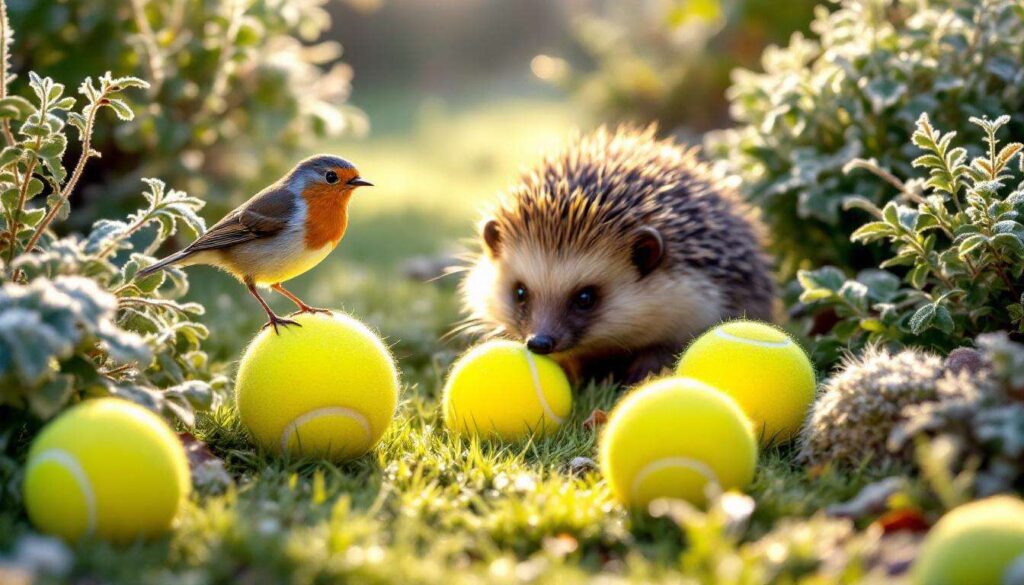
As temperatures plummet and frost blankets the ground, wildlife faces increasing challenges in finding shelter and sustenance. A simple yet ingenious solution has emerged from gardening communities across the country: repurposing old tennis balls to create vital refuges for vulnerable creatures. This unconventional approach offers an accessible way for homeowners to support local fauna during the harshest months, transforming everyday objects into lifesaving resources for birds and hedgehogs alike.
Utility of tennis balls in the garden
Transforming waste into wildlife shelters
Tennis balls represent an innovative recycling opportunity that addresses both environmental waste and wildlife conservation. Rather than discarding worn-out balls, gardeners can convert them into functional habitats with minimal effort. The hollow structure of a tennis ball, once modified, provides an insulated chamber that retains heat and offers protection from wind and precipitation.
The process involves cutting a small entrance hole and suspending the ball in strategic locations throughout the garden. This transformation requires basic tools and takes mere minutes to complete, making it an accessible project for individuals of all ages and abilities.
Material properties beneficial for wildlife
The composition of tennis balls makes them particularly suitable for outdoor wildlife applications:
- Water-resistant rubber exterior that withstands rain and snow
- Felt covering that provides additional insulation
- Lightweight construction allowing easy installation
- Durable materials that last multiple seasons
- Non-toxic components safe for animal contact
These characteristics ensure that the shelters remain functional throughout winter whilst requiring minimal maintenance. The inherent properties of tennis balls create a microclimate within the cavity that proves essential for small creatures seeking respite from freezing conditions.
Understanding these practical applications sets the foundation for exploring how different species benefit from these improvised shelters, particularly our feathered friends who struggle most during cold snaps.
Protecting birds from the winter cold
Roosting sites for small bird species
Small birds such as blue tits, wrens and robins require secure roosting locations where they can conserve energy during long winter nights. Tennis balls positioned at appropriate heights offer ideal overnight refuges that shield them from predators and harsh weather. The confined space allows birds to maintain body temperature more efficiently than exposed branches or open nesting boxes.
Research indicates that birds can lose significant body mass overnight when temperatures drop below freezing. Access to insulated roosting sites dramatically improves their survival rates by reducing the metabolic demands of thermoregulation.
Protection from predators and elements
The single entrance hole design of modified tennis balls provides a defensive advantage against predators such as cats, magpies and sparrowhawks. The narrow opening restricts access whilst the spherical shape makes it difficult for larger animals to grip or manipulate. Additionally, the suspended positioning deters ground-based threats.
| Weather condition | Protection level | Benefit to birds |
|---|---|---|
| Heavy rain | High | Dry plumage maintenance |
| Strong winds | Moderate to high | Reduced heat loss |
| Snow and frost | High | Temperature regulation |
| Hail | Complete | Physical protection |
Beyond avian residents, ground-dwelling mammals also face considerable winter hardships that these simple structures can help alleviate.
Creating a safe habitat for hedgehogs
Ground-level shelter solutions
Whilst suspended tennis balls serve birds, ground-placed alternatives benefit hedgehogs preparing for hibernation or seeking temporary shelter. Positioning several balls together beneath hedges or in quiet garden corners creates a protective cluster that hedgehogs can nestle against or use as supplementary insulation for their hibernacula.
Hedgehogs require undisturbed locations with adequate cover to successfully hibernate. Tennis balls contribute to creating these conditions by:
- Adding structural support to leaf piles and natural debris
- Creating air pockets that improve insulation
- Marking areas that should remain undisturbed
- Providing emergency shelter during unexpected cold periods
Hibernation support structures
During hibernation, hedgehogs enter a state of torpor where body temperature drops significantly. Any additional insulation proves critical to survival. Tennis balls incorporated into purpose-built hedgehog houses or natural hibernation sites enhance thermal retention without compromising ventilation. The spherical shape prevents compression of surrounding materials, maintaining crucial air circulation whilst maximising warmth.
These practical applications demonstrate immediate benefits, yet the environmental implications extend far beyond individual animal welfare.
The ecological benefits of tennis balls
Reducing landfill waste
Approximately 300 million tennis balls are manufactured globally each year, with a significant proportion ending up in landfills where they take centuries to decompose. Repurposing these items for wildlife conservation diverts waste from disposal systems whilst creating tangible environmental value. This circular approach exemplifies how creative reuse can address multiple ecological challenges simultaneously.
Supporting ecosystem balance
Healthy bird and hedgehog populations provide essential ecosystem services including pest control, seed dispersal and soil aeration. By improving winter survival rates for these species, tennis ball shelters contribute to maintaining ecological equilibrium. Birds consume vast quantities of insects and larvae, whilst hedgehogs control slug and beetle populations, reducing the need for chemical interventions in gardens.
The cumulative effect of numerous households adopting this practice creates a network of micro-habitats that strengthens overall biodiversity resilience. However, maximising these benefits requires thoughtful implementation and strategic placement.
Tips for properly placing the balls in your garden
Optimal positioning for bird shelters
Successful installation depends on several key factors:
- Height: suspend balls between 1.5 and 3 metres above ground
- Direction: position entrance holes facing away from prevailing winds
- Location: choose sheltered spots near natural cover
- Spacing: maintain at least 3 metres between individual balls
- Security: ensure firm attachment to prevent swaying
The entrance hole should measure approximately 30 millimetres in diameter for small birds, preventing larger species from monopolising the space. Drill or cut holes cleanly to avoid sharp edges that might injure occupants.
Ground placement considerations for hedgehogs
When positioning tennis balls for hedgehogs, prioritise locations that offer natural concealment such as beneath evergreen shrubs, against fence lines or within established compost areas. Avoid exposed lawn areas where disturbance is likely. Create small clusters of three to five balls to maximise insulation potential, and cover partially with leaves or straw to integrate them into the landscape.
Regular monitoring ensures these installations continue serving their intended purpose whilst revealing their broader impact on garden ecosystems.
The positive impact on local biodiversity
Measurable improvements in wildlife populations
Gardens implementing wildlife-friendly practices, including supplementary shelters, report increased species diversity and abundance. Citizen science projects have documented higher overwinter survival rates for small birds in areas with adequate roosting sites. Similarly, hedgehog populations show improved resilience in neighbourhoods where multiple properties provide suitable habitats.
Creating wildlife corridors
Individual gardens become components of larger ecological networks when multiple households adopt conservation measures. Tennis ball shelters contribute to this connectivity by ensuring wildlife can move safely between territories whilst accessing essential resources. This collective approach proves particularly valuable in urban and suburban environments where natural habitats face increasing fragmentation.
The ripple effects extend beyond immediate species benefits, fostering greater environmental awareness and encouraging additional conservation actions within communities.
Simple interventions can yield profound results for wildlife struggling against winter’s severity. Repurposing tennis balls demonstrates how accessible conservation can be, requiring neither specialist knowledge nor significant investment. By providing essential shelter for birds and hedgehogs, gardeners directly influence survival rates whilst contributing to waste reduction. This dual benefit exemplifies practical environmentalism that anyone can implement. As more households embrace such initiatives, the cumulative effect strengthens local ecosystems and reconnects communities with the natural world thriving in their midst.