
Gardeners have long suspected that a gentle touch could make all the difference to their young plants. This intuitive practice, passed down through generations, now has scientific backing. The phenomenon known as thigmomorphogenesis reveals how physical contact triggers remarkable changes in plant development, encouraging seedlings to grow shorter, stockier, and ultimately more resilient. Understanding this natural response opens up new possibilities for nurturing healthier plants from the earliest stages of growth.
Introduction to the concept of thigmomorphogenesis
What is thigmomorphogenesis
Thigmomorphogenesis describes the way plants modify their growth patterns in response to mechanical stimulation. This biological process occurs when seedlings experience physical forces such as touch, wind, rain, or even the brushing of neighbouring plants. Rather than simply enduring these pressures, plants actively adapt their structure to become more robust and better equipped to withstand environmental challenges.
The term itself combines Greek words meaning “touch” and “form”, reflecting the fundamental relationship between physical contact and structural change. When seedlings detect mechanical stress, they respond by altering their growth hormones, particularly reducing the production of auxins that promote vertical elongation. This hormonal shift redirects energy towards lateral growth and tissue strengthening.
How plants respond to mechanical stress
Plants possess sophisticated sensory mechanisms that detect even the slightest physical disturbance. When stroked or touched, seedlings trigger a cascade of cellular responses that include:
- Increased production of calcium ions within plant cells
- Activation of specific touch-responsive genes
- Changes in cell wall composition to create stronger structures
- Redistribution of growth hormones throughout the plant
These responses occur within minutes of stimulation, demonstrating the remarkable sensitivity of plant tissues. The cumulative effect of repeated touching leads to visible changes in plant architecture, with seedlings developing thicker stems, shorter internodes, and a more compact overall form. This adaptive strategy mirrors the way plants in windy environments naturally develop sturdier structures to resist being damaged or uprooted.
Understanding these mechanisms provides gardeners with valuable insights into how simple interventions can significantly influence plant development and prepare seedlings for the challenges they will face outdoors.
Why stroking seedlings
The benefits of regular physical contact
Incorporating gentle stroking into your seedling care routine delivers multiple advantages. Regular physical contact helps prevent the common problem of leggy growth, where seedlings stretch excessively towards light sources, resulting in weak, elongated stems that struggle to support themselves. By stimulating thigmomorphogenic responses, stroking encourages plants to invest resources in strengthening existing tissue rather than simply growing taller.
The practice also serves as a form of environmental conditioning. Seedlings raised entirely indoors often experience shock when transplanted to outdoor conditions where wind and weather create constant movement. By introducing controlled mechanical stimulation early, gardeners effectively prepare their plants for this transition, reducing transplant stress and improving survival rates.
| Characteristic | Stroked seedlings | Unstroked seedlings |
|---|---|---|
| Stem diameter | 20-30% thicker | Standard thickness |
| Height | 10-20% shorter | Taller, often leggy |
| Transplant success | Higher survival rate | More prone to shock |
Simulating natural conditions
In their natural habitats, plants constantly experience movement from wind, rain, and animal contact. Indoor seedlings miss these crucial environmental cues, which can result in plants ill-prepared for outdoor life. Stroking replicates these natural forces in a controlled manner, triggering the same adaptive responses that wild plants develop automatically.
This technique proves particularly valuable for seedlings grown on windowsills or in greenhouses, where air circulation may be minimal. Without regular movement, these plants often develop weak stems that cannot support their own weight once moved outside. A few moments of gentle touching each day can compensate for this absence of natural stimulation.
These preparatory measures become especially important as planting season approaches and gardeners begin hardening off their seedlings for outdoor conditions.
The effects on plant growth
Structural changes in seedlings
The most visible impact of regular stroking appears in the physical architecture of seedlings. Plants subjected to mechanical stimulation develop noticeably thicker stems with increased lignification, the process by which plant tissues become woody and rigid. This structural reinforcement provides better support for leaves and eventual flowers or fruits.
Cell division patterns also change in response to touch. Rather than elongating rapidly, cells in stroked seedlings tend to expand laterally, creating a more compact growth habit. The internodal distance—the space between leaf nodes along the stem—decreases significantly, resulting in bushier plants with more closely spaced leaves.
Hormonal and biochemical responses
Beyond visible changes, stroking initiates complex biochemical processes within plant tissues. The production of ethylene, a plant hormone associated with stress responses, increases following mechanical stimulation. This hormone plays a crucial role in coordinating the various growth adjustments that characterise thigmomorphogenesis.
Additionally, touched plants often exhibit enhanced production of secondary metabolites, compounds that serve protective functions. These include:
- Phenolic compounds that strengthen cell walls
- Defensive chemicals that deter pests
- Antioxidants that protect against environmental stress
- Proteins involved in structural support
Research indicates that these biochemical changes can persist even after the mechanical stimulation ceases, suggesting that early stroking creates lasting benefits for plant health and resilience. The enhanced defensive capabilities may also contribute to improved disease resistance in mature plants.
These physiological adaptations work in concert with proper cultivation techniques to produce the strongest possible seedlings.
Gardening tips for robust seedlings
How to stroke your seedlings properly
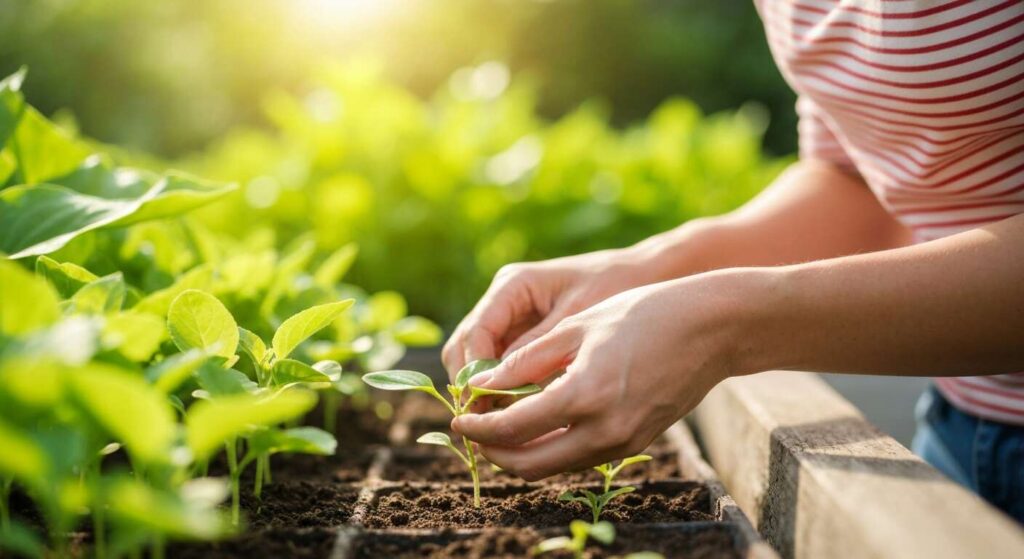
Implementing a stroking routine requires a gentle approach. Use your hand to lightly brush across the tops of seedlings, moving back and forth as if mimicking a gentle breeze. The motion should be firm enough to cause visible movement but not so vigorous as to damage delicate tissues. Aim for approximately 10 to 20 strokes per session.
Timing matters as well. Most gardeners find that stroking seedlings once or twice daily provides optimal results. Morning sessions allow plants to respond during their most active growth period, whilst evening stroking can be incorporated into routine watering and inspection activities. Consistency proves more important than duration; brief daily sessions outperform occasional intensive handling.
Complementary practices for healthy growth
Whilst stroking offers significant benefits, it works best as part of a comprehensive care strategy. Adequate lighting remains essential, as insufficient light drives the etiolation that stroking helps prevent. Position seedlings to receive maximum available light, and consider supplemental grow lights if natural illumination proves inadequate.
Proper spacing prevents overcrowding, which can lead to competition for light and resources. Well-spaced seedlings also receive better air circulation, which provides natural movement that complements manual stroking. Regular rotation ensures all sides of each plant receive equal light exposure, promoting balanced development.
| Practice | Frequency | Benefit |
|---|---|---|
| Stroking | 1-2 times daily | Stronger stems, compact growth |
| Rotation | Every 2-3 days | Even light exposure |
| Air circulation | Continuous | Natural movement, disease prevention |
Avoiding common mistakes
Excessive handling can stress seedlings rather than strengthen them. Signs of over-stimulation include stunted growth, yellowing leaves, or wilting. If seedlings appear distressed, reduce stroking frequency and intensity. Remember that the goal involves gentle conditioning, not aggressive manipulation.
Timing also matters; avoid stroking immediately after watering when stems are most turgid and potentially more susceptible to damage. Similarly, handle seedlings carefully during their most vulnerable growth stages, such as immediately after germination when cotyledons first emerge.
These careful cultivation methods lay the groundwork for successful transplanting and long-term plant health.
The importance of preparing young plants
Hardening off and transplant success
The transition from protected indoor environments to outdoor gardens represents a critical period in a plant’s life. Seedlings that have experienced regular stroking adapt more readily to this change, having already developed some tolerance for environmental variation. Their sturdier stems and enhanced tissue strength enable them to withstand wind and temperature fluctuations that might damage unprepared plants.
Hardening off—the gradual acclimatisation process before permanent transplanting—proceeds more smoothly with pre-conditioned seedlings. These plants require shorter adjustment periods and demonstrate reduced transplant shock, allowing them to establish more quickly in their final growing positions.
Long-term benefits for mature plants
The advantages of early mechanical stimulation extend well beyond the seedling stage. Plants that develop robust root systems and sturdy stems from the beginning allocate resources more efficiently throughout their lifecycle. They show improved resistance to lodging, the tendency of weak-stemmed plants to fall over under the weight of foliage or fruit.
Furthermore, the defensive compounds and structural reinforcements developed through thigmomorphogenesis may contribute to better overall plant health. Stronger plants often exhibit enhanced resistance to both pest damage and disease infection, reducing the need for interventions later in the growing season.
This foundation of strength and resilience connects directly to broader scientific understanding of plant responses to their environment.
Thigmomorphogenesis: a science to explore
Ongoing research and applications
Scientific investigation into thigmomorphogenesis continues to reveal new insights about plant biology and potential agricultural applications. Researchers explore how mechanical stimulation might be scaled up for commercial crop production, potentially reducing the need for chemical growth regulators whilst producing more resilient plants.
Studies examine the genetic basis of touch responses, identifying specific genes that activate during mechanical stimulation. This knowledge could eventually enable plant breeders to select varieties with enhanced responsiveness to beneficial stress, creating crops naturally predisposed to develop robust structures.
Practical implications for home gardeners
For amateur growers, understanding thigmomorphogenesis transforms a simple practice into an evidence-based cultivation technique. This knowledge empowers gardeners to make informed decisions about seedling care, recognising that gentle handling serves a genuine physiological purpose rather than merely representing folklore or superstition.
The accessibility of this method makes it particularly valuable. Unlike many advanced gardening techniques, stroking requires no special equipment, chemicals, or expertise. Any gardener can implement this practice immediately, regardless of experience level or available resources, making it a universally applicable tool for improving seedling quality.
As our understanding of plant responses deepens, simple practices like stroking seedlings gain new significance, bridging traditional wisdom with modern scientific knowledge to help gardeners cultivate stronger, healthier plants from the very beginning.
The practice of stroking seedlings exemplifies how scientific research validates and explains traditional gardening wisdom. Thigmomorphogenesis demonstrates that plants actively respond to their environment, adapting their growth to meet physical challenges. By incorporating gentle, regular touching into seedling care routines, gardeners trigger beneficial structural and biochemical changes that produce sturdier, more resilient plants. This simple technique, combined with proper lighting, spacing, and gradual hardening off, prepares young plants for successful outdoor life whilst requiring minimal time or resources. Understanding the science behind this age-old practice empowers gardeners to nurture healthier seedlings and ultimately achieve more productive gardens.